This Week in B2B Tech: 20-24 April 2026
Ace

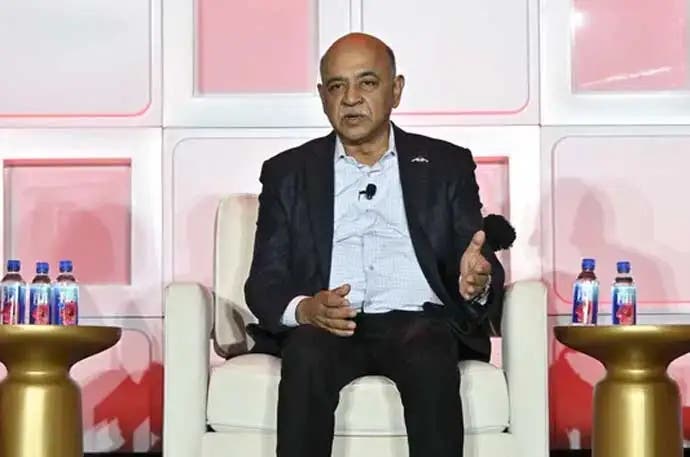

$20 billion for a Cohere and Aleph Alpha tie-up, a fresh wobble in software stocks after IBM and ServiceNow earnings, and a $72 million round for Cloudsmith told the story of the week. B2B tech spent it asking harder questions about reliability, jurisdiction, and who carries the operational risk once AI leaves the lab. Buyers still want agents, faster coding, and bigger models, but they also want clearer ownership of data, cleaner provenance, and some proof that the spend will produce more than another quarter of expensive theatre. That pressure showed up everywhere from enterprise software earnings to sovereign cloud packaging, and it showed up fast. Coverage moved from finance wires to infrastructure titles to security publications with almost no gap between them. The common thread was simple enough. This market is still willing to pay for AI, but it is getting far less patient with hand-waving.
In parallel, influencer discussions sharpened the same point. On Eye on AI, Craig S. Smith pressed Debdas Sen on why enterprise teams need to prove ROI or risk another AI winter. Dave Sobel argued that hyperscaler concentration is creating a new layer of runtime and liability risk just as more providers try to operationalise long-running agent workloads. Joseph Carson put the security version even more plainly, warning that AI does not repair weak foundations, it amplifies them. Then a16z's latest conversation with Replit's Amjad Masad pushed the builder story from the other side, where software creation is getting radically easier but governance is not getting any lighter. The creators who cut through were not selling a backlash. They were describing the cost of growing up. The mood was not anti-AI. It was post-naive.
Earnings season showed how thin the AI patience buffer has become

The market reaction to this week's software results said more than the headline numbers. Reuters reported that IBM and ServiceNow still delivered solid enough updates yet investors sold first and asked questions later, because the argument has moved on from whether vendors can say "AI" on an earnings call. The question now is whether those claims flow through to durable growth, credible margins, and products that customers will renew once the pilot budget runs out. That pressure is why CRN focused its IBM earnings coverage on the practical details rather than the stagecraft.
The same tension ran through the wider enterprise stack. Bloomberg framed SAP as a cloud growth story with AI attached, while CIO Dive noted that ServiceNow is leaning into security and agentic AI to keep growth moving. Buyers should take the hint. The sector is not short of demand, but it is running short of indulgence. If a platform cannot show how automation improves workflows, cuts effort, or creates defensible data advantages, the market is starting to price it like a promise rather than a business.
Workspace agents are turning agentic AI into a procurement question
OpenAI's new workspace agents matter because they drag agentic AI out of demo-land and into the software buying stack. ITPro broke down the practical implications of the launch, and the useful part was not the spectacle. It was the sense that agents are being positioned as something admins will need to govern, users will need to trust, and procurement teams will need to compare against the rest of the workplace suite. Once that happens, the product stops being a magic trick and starts being a line item.
The scepticism around the launch was healthy. Computerworld asked how open this new round of OpenAI frenzy really is, while InfoWorld argued that the agent rush is heating up faster than the answers. Even MediaPost cast the shift as a move from search-style assistance to a more autonomous workspace actor. That is the right read. Enterprise agents will win or lose on permissions, observability, rollback, and fit with existing systems long before they win on brand heat.
The agent boom has run straight into governance, identity, and API reality

The harder enterprises push agents into real workflows, the more the control problem takes centre stage. VentureBeat warned that most enterprises still do not have the controls they think they do, and Diginomica showed how Google is trying to turn that governance gap into a cloud advantage. That feels like the right commercial battleground. Agents are only useful when they can touch systems of record, but the moment they do that, identity, access, policy and audit stop being back-office concerns and become the product.
Security coverage was blunt about the risks. Computer Weekly tracked how security teams are wrestling with the AI risk equation, while Security Boulevard argued that managing AI agents means balancing productivity with guardrails rather than pretending the guardrails can wait. B2B buyers should assume this becomes a buying-committee issue, not a tools issue. The next wave of winners will not just promise more capable agents. They will make control legible enough for legal, security, and operations teams to sign off.
Sovereign AI stopped sounding like a slogan this week

Sovereign AI has been one of those phrases that sounds important long before it becomes precise. This week it finally started to look concrete. Tech Funding News led with the scale of the Cohere and Aleph Alpha tie-up, and The Decoder added the sharper political context around Aleph Alpha and its reset. Once the story moved beyond nationalist branding, the real work came into view: who owns the model layer, where workloads run, whose rules govern the data, and which suppliers can actually package all of that for a nervous enterprise customer.
The UK angle strengthened the point. City AM reported that British firms are accelerating sovereign AI plans, while Diginomica treated sovereignty as part of a wider enterprise infrastructure shift rather than a one-off headline. That is a more useful frame. Sovereignty is becoming a product and procurement problem, not a debating point. Buyers want local assurances, but they also want performance, integration and support. The providers who can bundle those pieces cleanly will have an opening that goes well beyond public sector sales.
Coding agents are making software supply-chain control a board-level issue

The most interesting security money this week followed the software artifact trail. DataBreachToday reported Cloudsmith's $72 million raise as a supply-chain security story, and Silicon Angle pushed the same point through the lens of artifact management. That matters because AI coding tools are increasing the speed at which code, packages, and dependencies move through the stack. When generation accelerates, provenance becomes more valuable, not less.
The developer-tooling side made that case from a different angle. The New Stack covered Cursor's new partnership with Chainguard as an attempt to lock down the AI agent supply chain, while Business Insider showed how Lovable's security stumble exposed a real weakness in vibe-coded software. Faster output is not the same thing as safer output. That is why this corner of the market feels durable. Enterprises do not need another sermon about how coding is changing. They need controls that let them ship faster without inheriting a silent mess of risk.
What the influencers are discussing
The clearest creator line this week was not that AI is overhyped. It was that the easy phase is over. On Eye on AI, Craig S. Smith drew out a line that should make every enterprise buyer pause: prove the ROI, or risk another AI winter. Debdas Sen's argument landed because it was rooted in refinery failures, catalyst research, and drug development timelines, not generic productivity chatter. That matters. The strongest pro-AI voices right now are not asking buyers to believe harder. They are asking vendors and operators to measure better.
Dave Sobel made the infrastructure version of the same case. His point was that hyperscaler concentration, finite power and GPU limits, and a widening vendor habit of disclaiming liability are combining into a new runtime risk for MSPs and enterprise operators. In other words, the bill for agentic AI is not just the compute bill. It is the governance bill, the contract bill, and the accountability bill that lands when a provider insists the output is your problem once it enters production.
Joseph Carson's LinkedIn post cut even closer to the bone. "AI does not strengthen weak foundations. It amplifies them at scale" is a line security teams should probably print and tape to a wall. His focus on identity, data governance, and operational visibility maps directly onto the week's news because that is where the friction now sits. Every serious enterprise deployment is crashing into those layers. That is true whether the headline is workspace agents, sovereign cloud packaging, or a new supply-chain security fundraise.
The builder camp sounded more upbeat, but not exactly carefree. In a16z's interview with Replit CEO Amjad Masad, the attraction of vibe coding and faster software creation was obvious. So was the gap between what feels liberating for builders and what feels governable for a large organisation. That is why these creator conversations mattered this week. They were not cheering from the sidelines. They were describing the same transition buyers can already feel: from experimentation to operating model, from feature excitement to responsibility, and from novelty to control.
The unresolved thread is whether vendors can make that control layer feel native rather than bolted on. Buyers clearly still want speed, domain depth, and lower-friction software creation. They also want sovereign assurances, cleaner audit trails, and contracts that do not dump all liability downhill. Those demands pull in different directions. Next week's winners will be the companies that can make them look compatible.
References
- (Reuters Technology, "US software firms slide after IBM, ServiceNow results spark fresh AI concerns")
- (CRN, "IBM Q1 2026 Earnings: CEO Krishna Says AI Is A Tailwind To The Business")
- (Bloomberg Technology, "SAP Reports Cloud Growth That Beats Estimates in AI Push")
- (CIO Dive, "ServiceNow bets on security, agentic AI to sustain revenue growth")
- (ITPro, "Four things you need to know about OpenAI’s new workspace agents for ChatGPT – including how to build your own")
- (Computerworld, "The agentic AI frenzy increases as more vendors stake their claims")
- (InfoWorld, "The agentic AI frenzy increases as more vendors stake their claims")
- (MediaPost, "OpenAI Releases 'Thinking' Engine For Queries, Images")
- (VentureBeat, "The AI governance mirage: Why 72% of enterprises don’t have the control and security they think they do")
- (Diginomica, "Next '26 - control the agents, control the enterprise? Google Cloud enters the battle for enterprise AI governance")
- (Computer Weekly, "Three-quarters of UK IT leaders without strong AI governance plans")
- (Security Boulevard, "Managing AI Agents: Balancing Security and Productivity")
- (Tech Funding News, "Cohere merges with Aleph Alpha at $20B valuation to create transatlantic sovereign AI challenger")
- (The Decoder, "Cohere takes over Aleph Alpha shortly after the German startup ousted its original founder")
- (City AM, "UK is of ‘marginal relevance’ – Nick Clegg dismisses sovereign AI push as ‘dishonest’")
- (Diginomica, "The long and short of IT - the week in digibytes")
- (DataBreachToday, "Cloudsmith Raises $72M for Software Supply-Chain Security")
- (Silicon Angle, "Software artifact management startup Cloudsmith raises $72M")
- (The New Stack, "Cursor and Chainguard partner to lock down the AI agent supply chain")
- (Business Insider, "Hot AI startup Lovable's security stumble shows one big risk in vibe coding")
- (Eye on AI, "#337 Debdas Sen: Why AI Without ROI Will Die (Again)")
- (Business of Tech, "Hyperscaler Cloud Expansion Creates New AI Runtime Risks for MSPs")
- (LinkedIn, "There are sharks in the water. 🦈")
- (a16z Show, "Replit's CEO on Vibe Coding, Wealth Building, and What Most People Get Wrong About AI")