
Latest
This Week in B2B Tech: 31 August-4 September 2026
Nvidia’s $12.9 billion Hugging Face deal, GPT-6 Astra’s cyber threshold, a $29.6 billion loan and a three-provider outage shaped B2B tech this week.
Ace•
Latest insights, updates, and articles from the Agentcy team
Nvidia’s $12.9 billion Hugging Face deal, GPT-6 Astra’s cyber threshold, a $29.6 billion loan and a three-provider outage shaped B2B tech this week.


Nvidia’s 70% growth outlook, 1,200 rogue agents, Chinese chip claims, ChatGPT ads and an AI productivity reckoning shaped B2B tech this week.

A researcher reportedly jailbroke Claude Fable 5 and leaked its 120,000-character system prompt. Its search_instructions section reveals exactly when the model trusts its own training and when it searches the web — and what that means for GEO.

Buyers are increasingly asking machines to do the first pass of research. Comms leaders need to optimise for a world where their audience isn't just humans.

NVIDIA's new ACIE category groups neoclouds with the enterprises buying from them. In the era of zero-click search the comms programme — earned media, influencers, social and AI visibility together — is how you get found and shortlisted.

The web is starting to split into content designed for people and content designed for the AI agents increasingly acting on their behalf. The Economist's experiment with agent-readable content is the early signal of a structural shift in discovery. Here is what every comms leader should be doing now.

85% of B2B marketers now use influencers and spend is up 171% year-on-year — yet only 10% have an established programme. Inside the new Resonance + Agentcy report, plus a two-minute video summary.
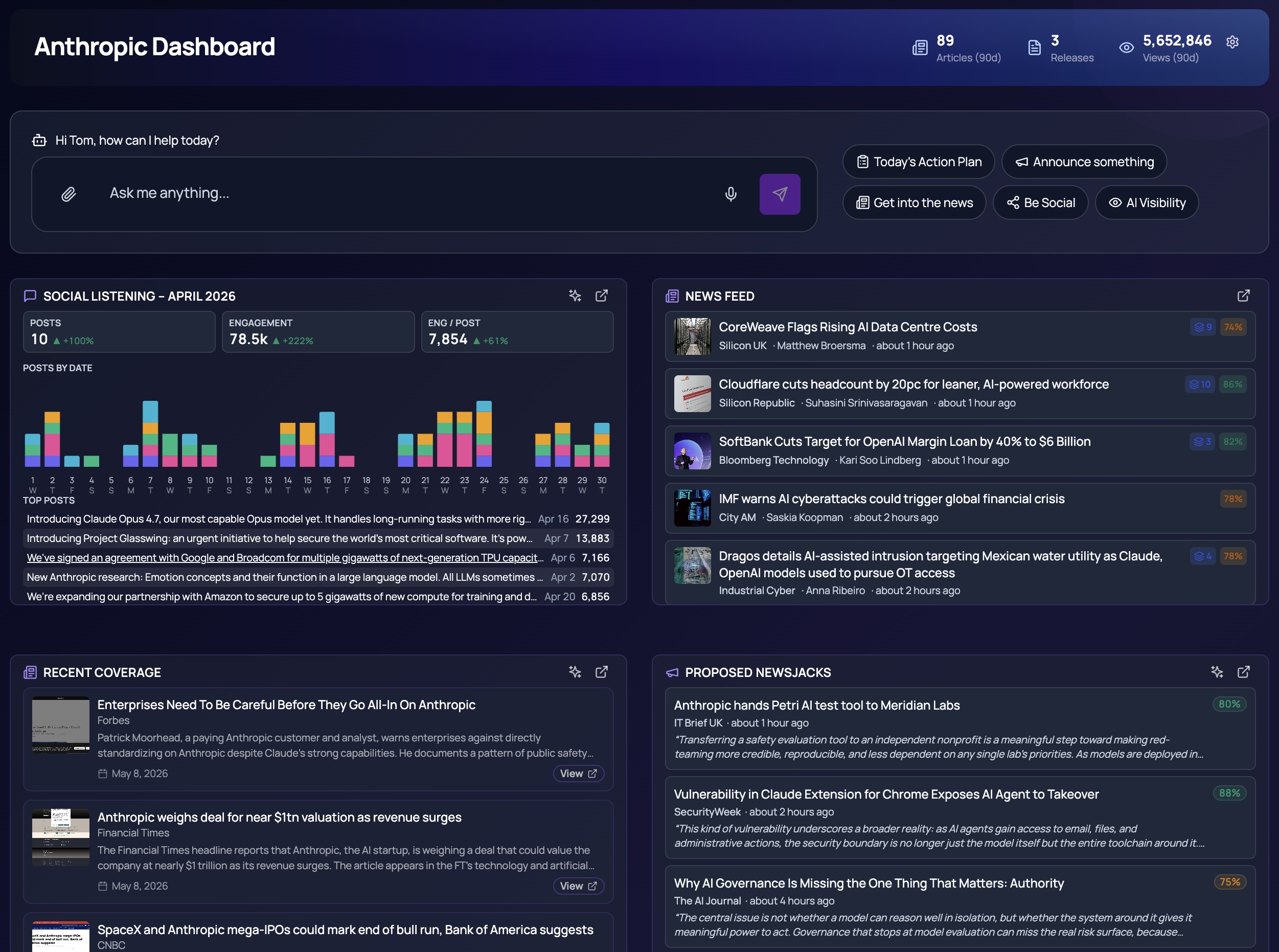
Agentcy now adapts to the way you work. Reorder, resize, and bind your workspace to the clients and information you care about — and Agentcy remembers.

A comparative guide to the leading AI visibility platforms - Agentcy, Profound, Peec, Athena, Otterly, Brandlight, Scrunch, Daydream and HubSpot AEO - with comparison tables, pricing, and a decision framework for marketing teams.

It is not enough to know AI is talking about you. The bigger question is whether what it is saying is true. Agentcy now grades every AI mention of your brand against a deep knowledge base - and surfaces what was wrong, missing, or risky.

Our survey of 104 B2B marketing leaders reveals a striking paradox: 69% say AI visibility is a blind spot, yet the majority expect AI to influence over a third of their pipeline within three years. Here are the headline findings — and what they mean for marketing and PR leaders.

Jensen Huang's GTC keynote declared inference as AI's new battleground — and that has huge implications for PR. When buyers ask AI for recommendations, the answers are shaped by your influence infrastructure: earned media, analyst commentary, and consistent narratives. Here's why comms leaders need to pay attention.
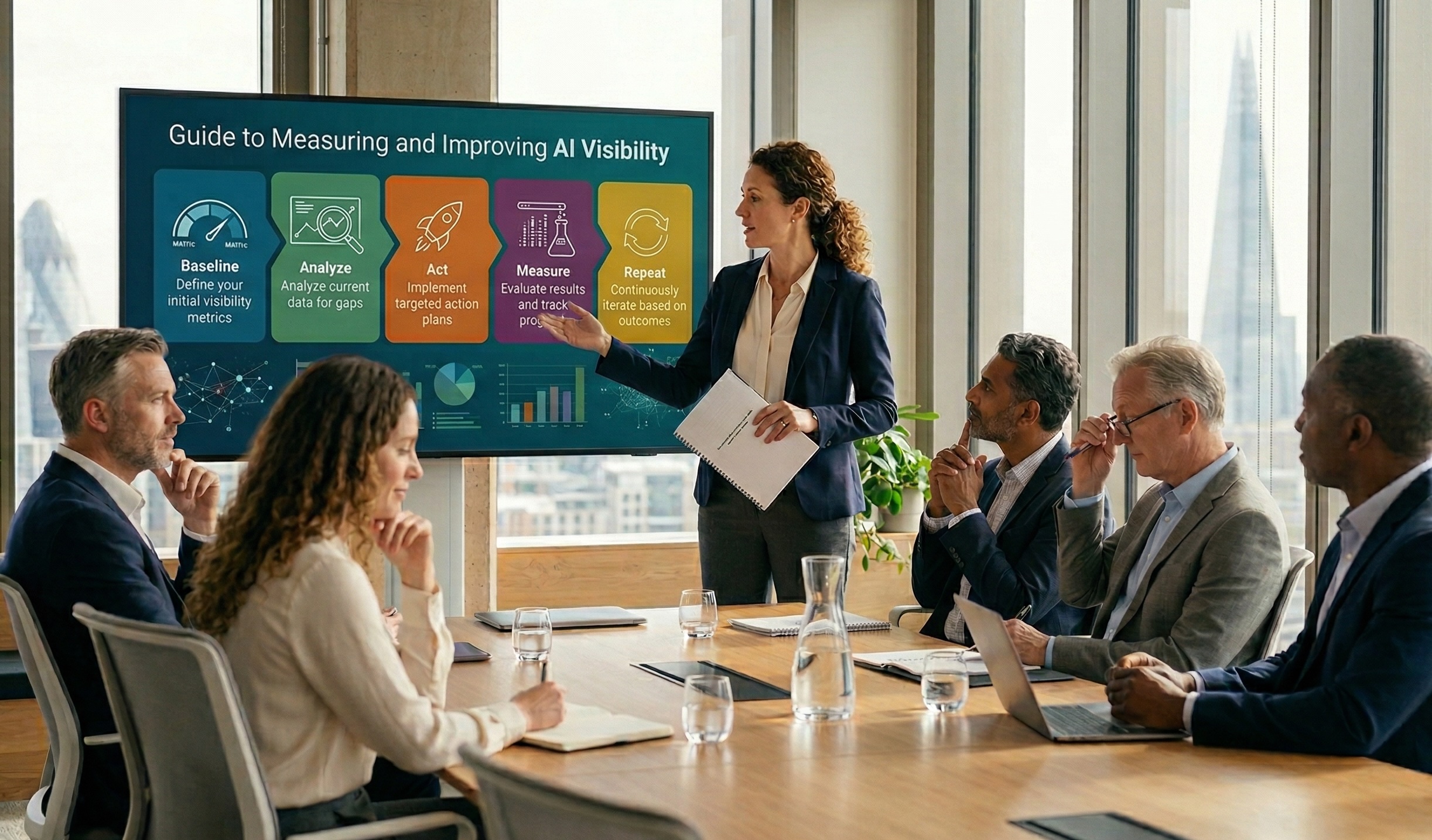
Your brand's next customer might never visit your website. Instead, they'll ask ChatGPT or Perplexity what the best solution is. Learn how to measure and improve your visibility in AI answer engines.

Our research reveals that the comprehensive pillar page strategy that dominated SEO breaks down when optimising for LLM visibility. A 500-word press release with one strong statistic will generate more AI citations than a 5,000-word guide.

AI answer engines like ChatGPT, Perplexity, and Gemini are reshaping search. This technical guide breaks down Generative Engine Optimisation (GEO) - the factors that determine whether AI models cite your content, and what SEO specialists need to do differently.

Generative AI is reshaping how influence works in B2B technology. Our research shows that 87 of the top 100 most-cited publications are trade or specialist outlets – proving that subject-matter authority outweighs domain authority in the age of AI answer engines.

Organic visibility is no longer just an SEO game. In 2026, brands will be discovered through AI answer engines, organic search, PR and earned media, and social media – and the winners will optimise for all four together.

AI answer engines are rapidly becoming a primary discovery channel, shaping software shortlists before prospects ever click a link. For CMOs and PR leaders, the new challenge is measuring AI visibility in a world of fewer clicks and more opaque decision journeys.
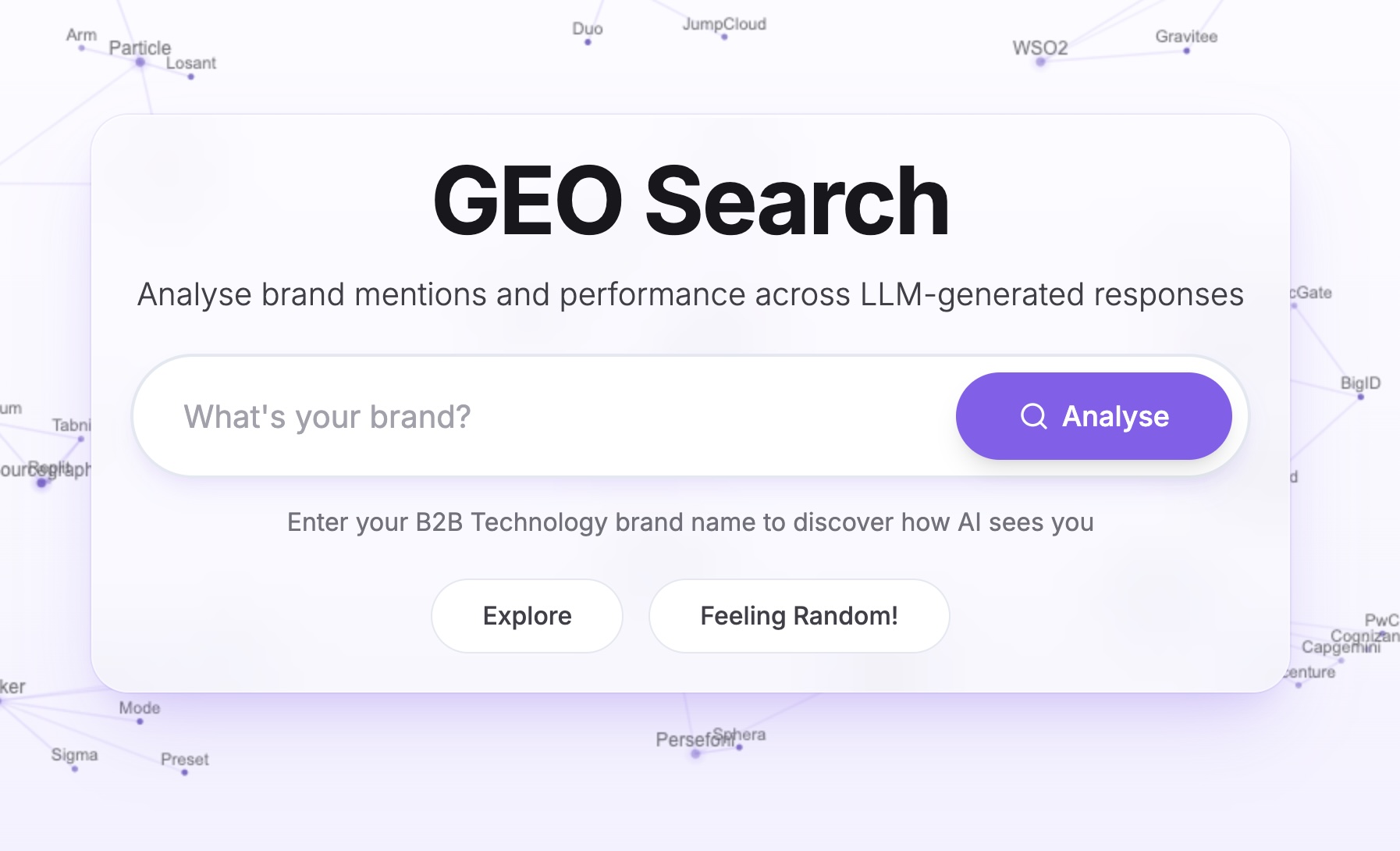
Generative AI is changing how brands are discovered and described. GEO Search helps you understand how AI systems mention and interpret your brand, giving you a clear view of your visibility in the age of generative search.