£1.1 billion in UK AI hardware support, a $35 billion chip-financing deal for Anthropic and a $295 billion Chinese build-out plan gave B2B tech its centre of gravity this week. The product launches mattered, but the bigger signal was control. Buyers were watching who owns compute, who pays for power, who can keep agentic systems safe and which vendors still look investable once AI costs move from experiment to operating line. The winners looked less like launch-week show-offs and more like suppliers with credible balance sheets, risk controls and boring delivery evidence.
In parallel, influencer discussions kept circling the same pressure point from the customer side. Sarah Evans warned that waiting six months on AI visibility will bite brands, while Ruben Dominguez argued that the next customer might not be human at all. David Linthicum supplied the counterweight, calling for AI to return to reality after three years of belief-led buying. The week’s argument was less about adoption and more about proof, especially for marketers and revenue teams that now have to persuade both people and machines.
Compute became the week’s hard currency

The UK tried to turn AI ambition into procurement muscle. Tech Funding News reported multi-billion pound pledges at London Tech Week, including £1.1 billion for AI hardware, but the sharper reading was that Britain still has to prove it can turn policy theatre into capacity. Sovereign AI now means chips, power contracts, public procurement and the patience to back local suppliers when cheaper global capacity is available.
The private markets made the same point in larger numbers. The Financial Times reported Apollo and Blackstone’s $35 billion chip-financing deal for Anthropic, while DCD covered EU moves to coordinate energy systems around data-centre demand. Compute is no longer a cloud abstraction. It is a financing structure and a grid problem, which means buyers should ask vendors how their model roadmap survives constrained power, memory and data-centre supply.
Geopolitics tightened the frame. Bloomberg reported Taiwan weighing tougher curbs on AI chip exports to China, and another Bloomberg report put China’s proposed AI build-out at $295 billion. That leaves enterprise customers exposed to a new kind of supplier risk: not whether a model works in a demo, but whether the infrastructure behind it sits inside a fragile trade route, a stretched grid or a financing bubble.
AI markets started pricing winners before customers did

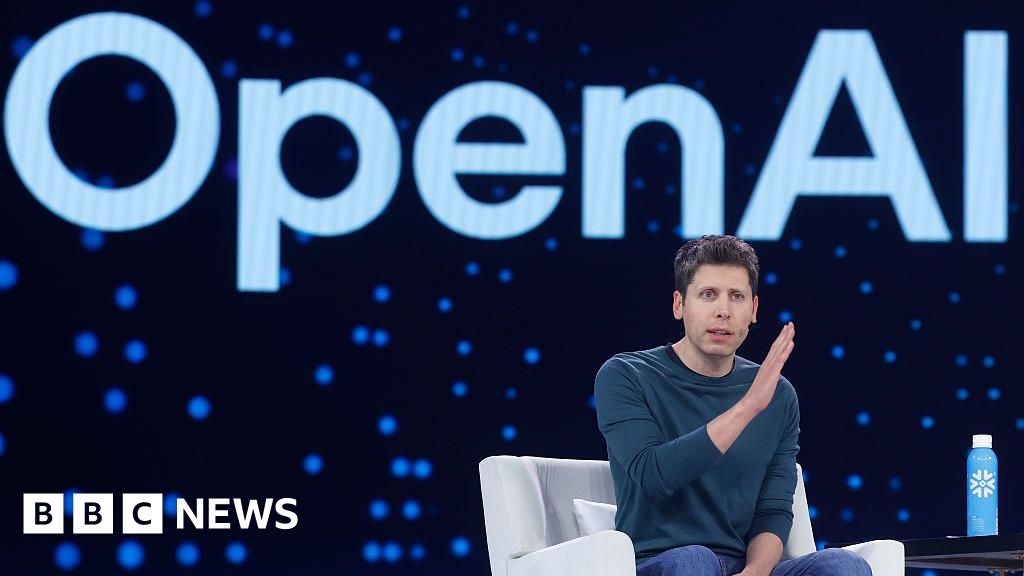
Public-market gravity pulled harder on AI this week. BBC News reported OpenAI’s plan to go public, and eWEEK said the company had filed confidentially. The story was not just another liquidity milestone. It set up a market test of whether investors will keep rewarding model labs for future dominance while their cost base, safety obligations and platform dependencies keep rising.
The valuation heat spread across the stack. Techzine reported Databricks seeking a valuation as high as $175 billion, while Tech Funding News read Anthropic’s S-1 as a bellwether for European AI startups. For enterprise buyers, this creates an awkward split. A vendor’s funding strength can be reassuring, but inflated expectations can push product teams towards lock-in, aggressive upsell and roadmap promises that procurement teams should treat with care.
Pricing pressure cut through the optimism. The Wall Street Journal framed an AI price war around OpenAI and Anthropic, which is good news for customers only if lower model prices translate into lower total cost. The harder question is whether cheaper inference encourages more waste. The week’s market signal was simple: AI valuations are moving faster than buyer evidence, and that gap is where disappointment usually starts.
The AI bill moved from licences to unit economics
AI cost control became more practical and more uncomfortable. Fierce Network warned that enterprises risk token-cost sticker shock, and Finextra argued that FinOps should watch more than the model sticker price. The problem is not only that agents consume tokens. It is that multi-step work hides spend inside retries, tool calls, context windows and human review.
Adoption evidence stayed patchy. IT Brief UK covered Forrester’s finding that agentic AI remains stuck in enterprise pilots, and ITPro reported that workers are losing almost a full day a week making AI usable. That is a brutal counterpoint to the productivity pitch. If employees have to supervise, correct and translate every output, the cost model is missing the largest input: human time.
The better answer is operating design, not another model comparison. Forbes put the point cleanly: the model is not the hard part, the workflow is. Buyers should ask vendors to show the task, the owner, the fallback, the review loop and the unit cost. Without that, AI programmes risk becoming expensive theatre with impressive usage dashboards and very little measurable work moved.
Coding agents exposed the security gap in the workflow

The agent story turned from productivity to exposure. The Hacker News reported an agentjacking attack that tricks AI coding agents into running malicious code, while DevOps.com used a Claude Code security flaw to show the risk inside developer workflows. The important shift is permissions. Once an agent can read repos, open tickets, call tools or change code, prompt manipulation becomes an operational risk rather than a chatbot quirk.
Research kept landing in the same place. CSO reported that prompt injection still breaks today’s AI agents, and another CSO story covered Hades, malware built to mislead AI security agents. Attackers do not need a science-fiction breakthrough if they can poison context, abuse trust or make a defensive tool read the wrong signal.
The software supply chain widened the concern. TechRepublic covered CISA’s warning that a LiteLLM flaw could expose enterprise AI gateways. Buyers should stop separating agent adoption from application security. The same workflow that lets a coding agent move faster also gives attackers a richer set of handles. The smart question is not whether the agent can write code. It is what it is allowed to touch when it is wrong.
Safety moved from lab argument to board risk

Claude Fable 5 put safety back at the centre of product scrutiny. The ChannelPro Network described Anthropic’s new model as guardrails included, but TechRepublic reported Microsoft restricting access during its own safety review. That tension is now familiar. Model labs want speed, partners want assurance, and enterprise customers need enough evidence to defend a deployment decision internally.
Regulators and financial supervisors moved in the same direction. Reuters reported tech executives heading to the G7 as leaders address AI and online safety, while TechInformed covered the FSB call for tighter controls on agentic AI in finance. Finance is a useful early warning sector because it has little patience for vague accountability. If an agent recommends, approves or executes, someone has to own the consequence.
Europe added institutional weight. The Decoder reported Germany greenlighting an AI Safety Institute modelled on the UK’s AISI. The commercial read is that voluntary trust signals are becoming procurement evidence. Vendors that can show evaluation, release controls and incident handling will have an advantage. Vendors that treat safety as a marketing line will find buyers asking harder questions before the contract lands.
Distribution moved into agents, answers and payments
.jpg)
The buyer journey became less human-facing this week. FStech reported Visa and OpenAI partnering on secure agentic AI payments, while Digiday covered ChatGPT ads landing in the UK. The direction is clear: AI systems are no longer only answering questions. They are moving towards discovery, recommendation, advertising and transaction.
Publishers pushed back on the inputs. Press Gazette reported US publishers telling Common Crawl to stop scraping and delete its archive, and Digiday said Reuters and Time adopted bot-blocking whitelists to rein in AI crawlers. Google’s AI opt-out also left publishers with an unsafe choice: accept extraction or risk losing visibility. That is not a healthy bargain, but it is the bargain many media businesses now face.
For B2B brands, the practical takeaway is uncomfortable. Search visibility, earned media and payment rails are being rewired around systems that choose before a person arrives. PR and marketing teams cannot treat this as an SEO tweak. They need machine-readable trust, cited expertise and clean product evidence, because the next shortlist may be built by an agent that never visits a campaign page.
What the influencers are discussing
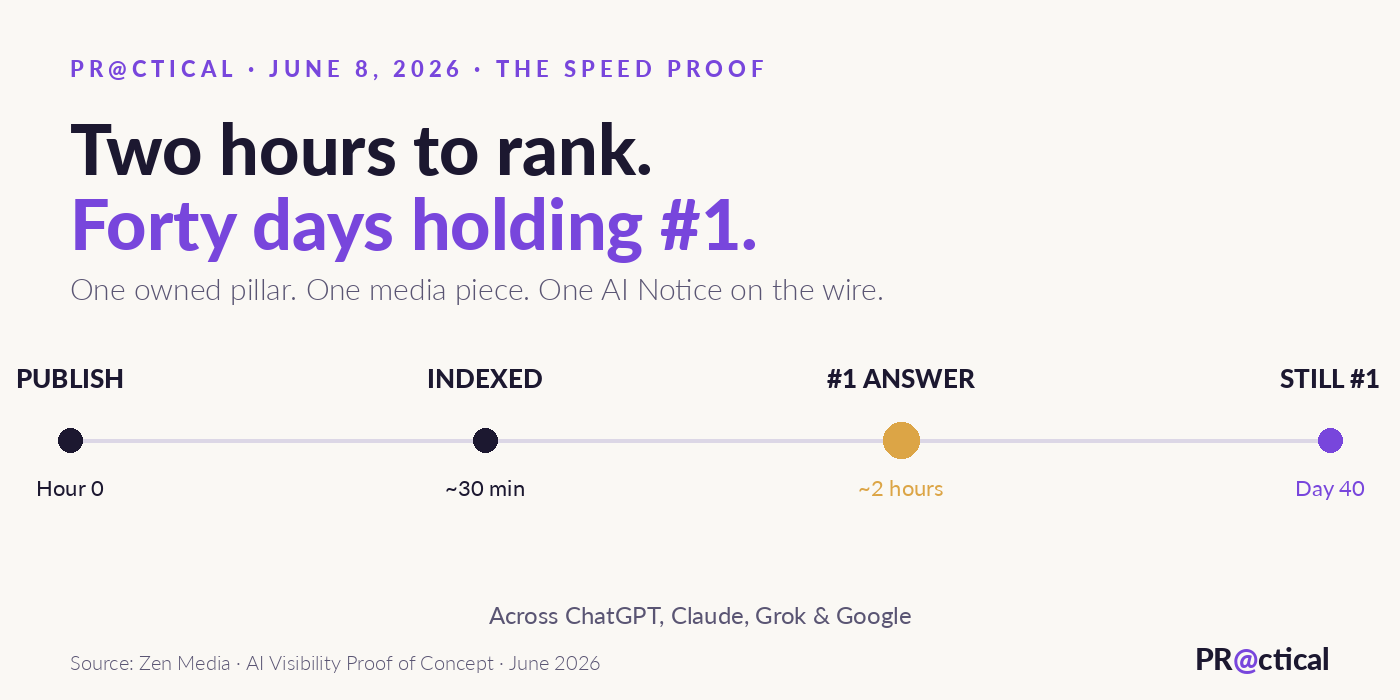
The week’s strongest influencer discussions treated AI as a buying-system problem. Sarah Evans wrote that “We’ll focus on AI in six months” is going to bite you, tying the warning to Google preparing to show how often brands appear in AI Overviews and AI Mode. Her point matters because it moves AI visibility out of the speculative bucket. If search tools expose answer-level presence, brand teams lose the excuse that this is too fuzzy to measure. The useful part of Evans’s warning was its timing. She treated AI discovery as a near-term reporting problem, not a 2027 planning theme.
Ruben Dominguez made the same argument from the revenue side: “Your next customer might not be a human.” His post cut through because it described a specific break in go-to-market logic. Agents skip ads, ignore landing pages and shortlist vendors before sales knows a deal exists. Matt Navarra’s warning to social media managers, that being always online now signals panic rather than control, fits the same pattern. Distribution is fragmenting, and more posting is not the same as more influence. The smarter play is to make expertise easier for people and systems to verify, rather than flooding every channel with more polished sameness.
Operator voices pushed against hype. David Linthicum called for AI’s return to reality, arguing that the market has turned AI into a belief system after three years of inflated claims. Casey Newton’s conversation with Satya Nadella, which drew lessons from Microsoft’s CEO and Figma’s Dylan Field, offered a more grounded version of the same debate: AI changes work, but design, culture and product judgment still decide whether the change is useful. That should appeal to B2B buyers because it cuts through benchmark theatre. The useful question is not which model looks smartest this week, but which operating habit gets better because the model is there.
Retail and commerce creators added useful texture. Paul Lewis’s retail discussion centred on the line that people determine whether technology succeeds, not the technology itself. That is the right ending for the week. Agents may buy, recommend, code and measure, but companies still have to decide what evidence they trust, what work they delegate and where the human review belongs. The influencer signal was not anti-AI. It was anti-vagueness.
The unresolved thread is accountability. Capital is racing into compute, AI labs are lining up public-market stories, agents are touching code and payments, and publishers are fighting over the right to be read by machines. Buyers now need a more practical test: where does the system run, what does it cost per useful outcome, which evidence proves it is safe and who signs off when it acts? Next week’s most useful AI story will not be another launch. It will be a credible answer to those four questions.
References
- (Tech Funding News, "AI is ‘no longer conceptual’ but UK still playing catch up as multi-billion pound pledges made at London Tech Week")
- (Financial Times, "Apollo and Blackstone raise $35bn in chip financing deal for Anthropic")
- (DCD (DatacenterDynamics), "EU launches two initiatives to bolster energy systems to meet data center demand across bloc")
- (Bloomberg Technology, "Taiwan Mulls Curbs on AI Chip Exports to China to Align With US")
- (Bloomberg Technology, "China Preps $295 Billion Plan to Fund AI Buildout")
- (BBC News Technology, "OpenAI plans to go public, intensifying investment race with Anthropic")
- (eWEEK, "OpenAI Files Confidentially for IPO, Joins Anthropic in Race to Wall Street")
- (Techzine, "Databricks valued at up to $175 billion in new funding round")
- (Tech Funding News, "Why Anthropic’s S-1 is more important for European AI startups than any funding round this year")
- (The Wall Street Journal, "The AI Price War Is Here, Piling Pressure on OpenAI and Anthropic")
- (Fierce Network, "Enterprises risk AI sticker shock as token costs pile up")
- (Finextra, "The New Flagship Model Doubled the Token Price. FinOps Should Be Watching a Different Number.")
- (IT Brief UK, "Forrester finds agentic AI stuck in enterprise pilots")
- (ITPro, "'Botsitting' is destroying productivity as workers spend nearly a full day each week making AI 'usable'")
- (Forbes, "Why The Model Isn’t The Hard Part, The Workflow Is")
- (The Hacker News, "Agentjacking Attack Tricks AI Coding Agents Into Running Malicious Code")
- (DevOps.com, "Security Flaw in Claude Code Illustrates the Risk of AI in Developer Workflows")
- (CSO, "Prompt injection breaks today’s AI agents, study warns")
- (CSO, "Meet Hades: The malware that lies to AI security agents")
- (TechRepublic, "CISA Warning: LiteLLM Flaw Could Expose Enterprise AI Gateways")
- (The ChannelPro Network, "Anthropic’s Claude Fable 5 brings Mythos-class AI to the public, guardrails included")
- (TechRepublic, "Microsoft Restricts Claude Fable 5 Access Amid AI Safety Review")
- (Reuters Technology, "Tech executives to attend G7 summit as leaders address AI, online safety")
- (TechInformed, "FSB calls for tighter controls on agentic AI in finance")
- (The Decoder, "Germany's National Security Council greenights an AI Safety Institute modeled after the UK's AISI")
- (FStech, "Visa and OpenAI partner to enable secure agentic AI payments")
- (Digiday, "ChatGPT ads land in U.K. as OpenAI outlines EU privacy rules")
- (Press Gazette, "US publishers tell Common Crawl to stop scraping and delete archive")
- (Digiday, "Reuters and Time adopt bot-blocking whitelists to rein in AI crawlers")
- (Digiday, "Google’s AI opt-out leaves publishers with a choice they can’t safely use")
- (Sarah Evans, ""We'll Focus on AI in Six Months" Is Going to Bite You. Google is Ready to Keep Score.")
- (Ruben Dominguez, "Your next customer might not be a HUMAN ⚡️")
- (David Linthicum, "AI’s Return to Reality")
- (Casey Newton, "Five things I learned from a conversation with Microsoft CEO Satya Nadella")
- (Matt Navarra, "Social media managers: being always-online used to be the flex.")
- (Paul Lewis, "AI Is Changing How We Shop. Are Retailers Ready?")