This Week in B2B Tech: 29 June-3 July 2026
Ace
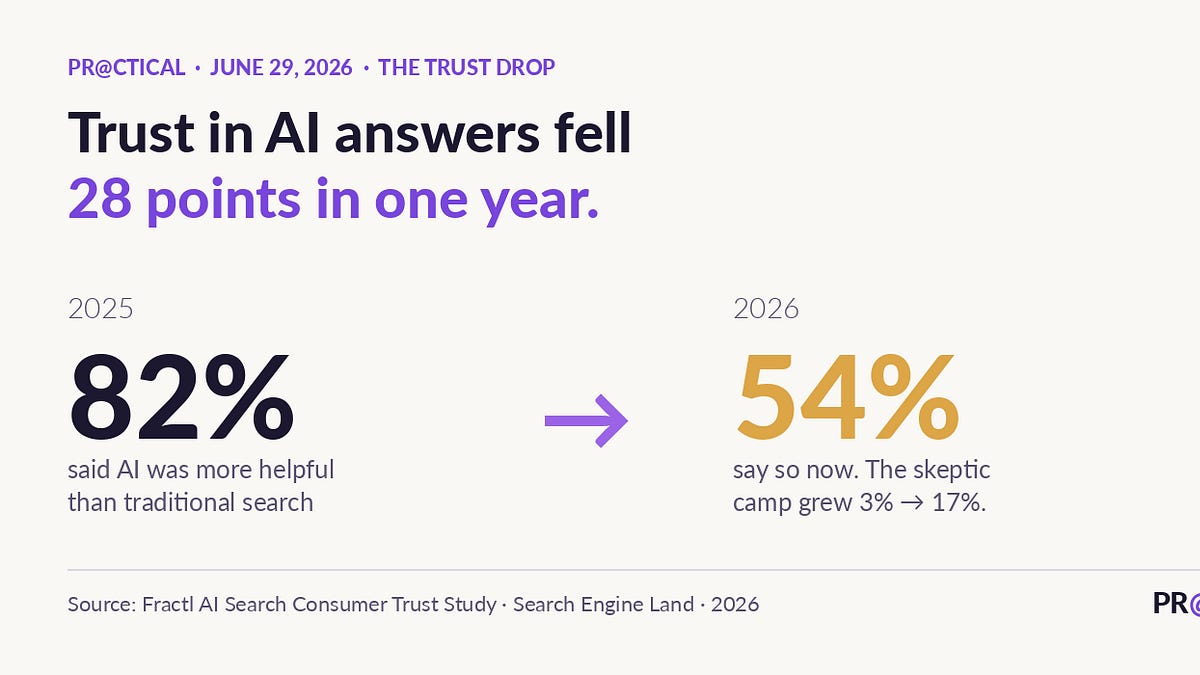


$234 billion of software spend at risk, 28,000 finance and tech jobs disappearing each month and a $2 billion Google damages order set the pace for B2B tech this week. The argument was not whether AI is still moving fast. It was whether vendors, regulators and buyers can keep up once agents touch workflows, software budgets, infrastructure and search visibility at the same time. The mood was sharper because the numbers were no longer theoretical.
In parallel, influencer discussions moved from excitement to evidence. Sarah Evans argued that AI answer visibility only matters if buyers believe the result, while Javvad Malik saw a new category forming around AI recommendations. Elena Verna supplied the useful brake, calling out AI confidence theatre. The sharpest creator thread was practical: show up in machine-mediated buying, measure what happens next and stop pretending a demo is an operating model. That gave the week a useful bias towards proof.
AI agents stopped being a product story and became a delivery bill
The most revealing AI launches this week did not look like launches. Bloomberg reported Amazon and Microsoft sending workers into the field to help customers use AI, and Tech Funding News put Microsoft’s Frontier Company at $2.5 billion. That is a quiet admission from the hyperscalers: buyers do not need another slide about agentic potential, they need implementation labour, governance muscle and people who can make the systems work inside messy companies.
The software model is starting to bend around that reality. Channel Dive covered Gartner’s warning that agents could redirect $234 billion of SaaS spending, because agents can complete work without sitting inside the dashboard and seat-count logic that enterprise software has lived on for years. Sifted reported Starling Bank cutting about 130 jobs amid an AI push, while Bloomberg put finance and tech job losses at 28,000 a month in 2026. Buyers should read that as a stress test, not just a productivity stat.
The awkward part is that failed AI work is now measurable too. CIO Dive reported US firms losing 2.4% of revenue on AI projects that miss expectations. That figure should change procurement conversations. A vendor that cannot show the owner, workflow, review loop and unit cost is not selling automation. It is selling organisational debt with a nicer interface.
AI sovereignty turned into a vendor-risk question
Anthropic’s export-control week gave buyers a live example of geopolitical dependency. Ars Technica reported the global release of Anthropic models after US safety testing, and Finextra framed the episode as government entering the AI vendor relationship. The point is bigger than one model family. If a supplier’s most capable system can be constrained by national security review, then continuity planning has to include policy shocks as well as uptime.
Europe heard the warning clearly. Computer Weekly asked whether Europe can close the sovereignty gap, linking the Anthropic episode to the possibility that overseas access can change quickly. IT Brief UK reported UK regulators moving generative AI into regular oversight work, which shows the other side of sovereignty: governments are not only policing AI, they are adopting it for supervision and enforcement.
Financial regulators made the control problem concrete. Computer Weekly covered Bank of England thinking on trading kill switches, and The Register reported the UN warning that AI governance is falling behind deployment. The commercial lesson is blunt. AI risk is no longer a theoretical policy debate. It is a contract clause, a continuity plan and a board-level question about who can switch a system off before it compounds a mistake.
Agent security moved from prompt hygiene to operational exposure

The week’s security signal was not another warning that prompts can be manipulated. It was that agents now have enough permissions for manipulation to matter. The Independent reported what researchers described as an automated ransomware attack run without human oversight, and Dark Reading covered fake bug reports hijacking AI coding agents at scale. That moves the risk from chat output into production paths.
Developer tools supplied the evidence. CSO reported Cursor sandbox bypass flaws that turned prompt injection into a remote-code vector, while TechRepublic covered Microsoft’s warning on poisoned MCP tool descriptions. The Model Context Protocol is useful because it gives agents tools. That is also why its descriptions, permissions and routing logic need the same paranoia as APIs and secrets.
The browser layer widened the problem. SecurityWeek reported BioShocking attacks against agentic browsers, and Forbes argued that AI agents force a rethink of cybersecurity. Buyers should stop treating agent controls as an AI team issue. Once a system can browse, code, file tickets or trigger a payment, the security boundary is the workflow itself.
Compute pressure showed up in power, chips and balance sheets

Infrastructure kept dragging AI out of abstraction. Search Enterprise AI reported that power and data-centre capacity are becoming enterprise constraints, not just problems for cloud providers. That matters because the buyer experience of AI depends on supply chains they cannot see: grid access, regional capacity, memory, chips and the economics of inference.
Capital chased the same bottleneck. DCD reported Together AI raising $800 million, DCD also covered Etched emerging with $800 million and a working inference chip, and Bloomberg said data-centre operator Switch was seeking $2 billion. The sums point to a market that still believes demand will outrun supply. They also raise a harder question for enterprise buyers: what happens to pricing and availability when every supplier is trying to reserve the same capacity?
Meta offered the clearest strategic wrinkle. CNBC reported that Meta’s cloud push may bring lower margins, while Tom’s Guide covered a DRAM price-fixing lawsuit tied to AI-driven memory demand. AI infrastructure is becoming a business model in its own right, but it is not a cheap one. The vendors that survive will be those that can turn capacity into dependable outcomes, not just impressive capital expenditure.
Publishers started forcing terms on the AI web

The web’s AI access bargain frayed again. MediaPost reported news publishers suing OpenAI and Microsoft over alleged scraping, while Press Gazette reported Google accepting the need for a new value exchange with publishers. Those are two versions of the same fight: who gets paid, who gets cited and who decides whether content can be used to train or answer.
Technical controls hardened. Silicon Republic reported Cloudflare blocking AI crawlers from ad-supported pages by default, and Digiday looked at Time and others rebuilding parts of the web for AI agents. That shift is important because it turns publisher strategy into infrastructure. Bot permissions, clean metadata and machine-readable experiences are becoming commercial choices, not just webmaster chores.
Distribution pressure landed in the same place. Daniel Rijo pointed to research finding Google AI Overviews cut publisher clicks 39.8%, and Press Gazette covered UK CMA proposals that could help publishers steer users away from app-store tolls. For B2B brands, this is the visibility lesson: if the web becomes more permissioned and answer-led, being credible in sources will matter more than being loud on your own site.
Platform power met a harder regulatory mood

Regulators and courts kept testing the platform business model. Silicon Republic reported a Swedish court ordering Google to pay nearly $2 billion to Klarna’s PriceRunner, and Computing reported Google losing its final appeal against a €4.1 billion Android competition penalty. The pattern is familiar, but the timing matters. AI is making distribution more concentrated just as courts are more willing to punish old gatekeeping behaviour.
Other platforms faced the same squeeze from different directions. CNBC reported Australia’s regulator taking Amazon to court over Prime contract terms, while Reuters reported Apple challenging Indian antitrust findings. The thread is not anti-tech sentiment. It is a clearer insistence that default settings, payment rails, contracts and app-store rules shape markets before customers make a choice.
Online safety added another pressure line. NBC News reported the US House passing children’s online safety measures, and iTWire said Australia is moving towards A$99 million fines over its under-16 social media ban. Platform governance is becoming more expensive, more local and more operational. B2B buyers should assume the same logic will arrive in AI procurement: prove control, prove compliance and expect more than one regulator at the table.
What the influencers are discussing
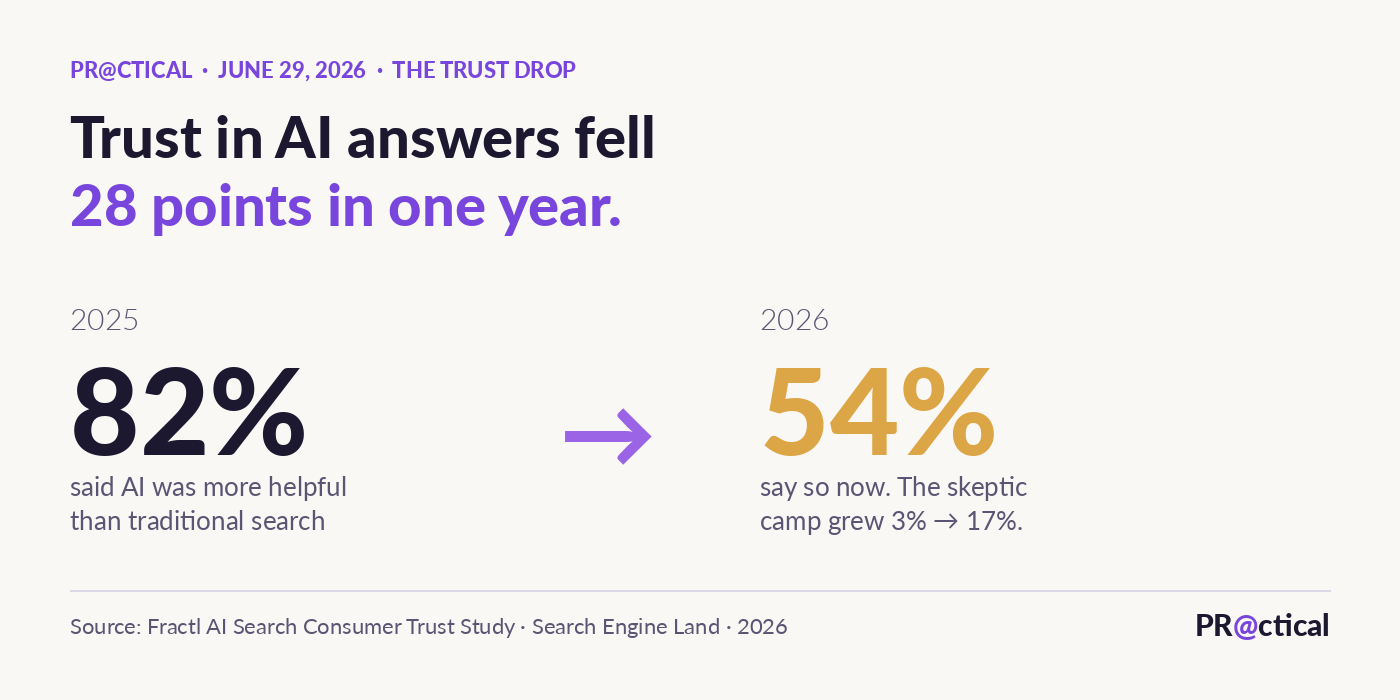
The best influencer discussions this week were less excited about AI reach than about AI trust. Sarah Evans wrote that visibility gets a brand into the AI answer, but believability gets it bought. Her point cut through because it refuses the easy version of answer-engine marketing. Appearing in a result is not the same as being selected. Buyers still need evidence, corroboration and a reason to believe the recommendation is not just scraped boilerplate.
Javvad Malik framed the rise of tools that make sure brands show up in ChatGPT and Claude recommendations, adding that this might be a real category rather than a polished rebrand of SEO. Rand Fishkin pushed the measurement question: if a brand appears in AI answers, does that create search demand, traffic or sales? That is the right pressure test. AI visibility has to move from presence to impact, otherwise it becomes another dashboard that tells marketers they are busy.
The operator voices were useful because they looked at the plumbing. Christopher S. Penn described wiring AI bot traffic into a separate GA4 account, which is exactly the kind of measurement hygiene B2B teams need if machine traffic and human traffic are now doing different jobs. Daniel Rijo’s Semrush write-up noted that 36 brands win visibility across AI systems while 1,200 vanish on one. That is a brutal reminder that AI discovery is uneven. It is not enough to be present in one answer engine if another ignores you entirely.
Elena Verna’s call to stop AI confidence theatre, meanwhile, gave the week its internal management lesson. Teams are mistaking fluent answers for certainty and experiments for operating change. The better influencer read was more disciplined: measure answer visibility, audit trust signals, separate machine traffic from people and ask what behaviour changes after the answer appears. That is not anti-AI. It is a demand for proof before the budget hardens.
The subtext for comms and marketing teams is uncomfortable. AI visibility is becoming a race to be cited, but citation without credibility is fragile. The voices worth listening to this week were the ones asking for evidence of buyer behaviour, analytics separation and stronger source quality. That is where the discipline is heading.
The unresolved thread is control. Agents are moving into work, regulators are moving into vendor relationships, publishers are forcing rules on crawlers, and platforms are losing some of the assumptions that made their economics so durable. Buyers now need a sharper test for every AI promise: who controls the system, who pays when it fails, what evidence proves it works and what happens when the rules change after the contract is signed?
References
- (Bloomberg Technology, "Big Tech Sends Workers Into the Field to Help Customers Use AI")
- (Tech Funding News, "Inside Microsoft’s Frontier Company: $2.5B to own AI implementation instead of selling it")
- (Channel Dive, "AI will redirect $234B in enterprise software spending: Gartner")
- (Sifted, "Starling Bank to cut 130 jobs amid AI push")
- (Bloomberg Technology, "Finance and Tech Cut 28,000 Jobs Monthly as AI Takes Hold")
- (CIO Dive, "US firms lose 2.4% of revenue on failed AI projects")
- (Ars Technica, "After spooking Trump into safety testing, Anthropic AI models get global release")
- (Finextra, "The government is now in your AI vendor relationship")
- (Computer Weekly, "Data dive: Kill switch and catch-up – can Europe close the sovereignty gap?")
- (Computer Weekly, "Bank of England explores trading ‘kill switches’ to contain AI meltdowns")
- (The Register, "UN warns of need for global governance to avoid an AI-pocalypse")
- (IT Brief UK, "UK regulators expand generative AI use in oversight")
- (The Independent, "An AI just carried out a cyber attack without any human oversight for the first time")
- (Dark Reading, "Fake Bug Report Hijacks AI Coding Agents at Scale")
- (CSO, "Sandbox bypass flaws in Cursor IDE highlight prompt injection as an RCE vector")
- (SecurityWeek, "‘BioShocking’ Attack Tricks AI Browsers Into Stealing Credentials")
- (TechRepublic, "Microsoft Flags MCP Tool Descriptions as Hidden AI Agent Attack Path")
- (Forbes, "How AI Agents Are Forcing A Rethink Of Cybersecurity")
- (Search Enterprise AI (TechTarget), "AI turns data center power into an enterprise challenge")
- (DCD (DatacenterDynamics), "Together AI raises $800m in Series C funding round")
- (DCD (DatacenterDynamics), "Inference chip startup Etched emerges from stealth with $800m funding, unveils working chip")
- (CNBC Technology, "Meta’s push into cloud computing means Wall Street has to prepare for lower margins")
- (Bloomberg Technology, "Data Center Firm Switch Seeks $2 Billion in Funding Round")
- (Tom's Guide, "I knew we weren't crazy! Samsung, SK Hynix and Micron just got sued - accused of using 'AI' to fix prices and screw your wallet in RAMpocalypse")
- (MediaPost, "News Publishers File Copyright Suit Against OpenAI, Microsoft")
- (Press Gazette, "Google accepts need for ‘new value exchange’ with publishers")
- (Digiday, "How Time and others are rebuilding parts of the web for AI agents")
- (Silicon Republic, "Cloudflare to block AI crawlers from ad-supported webpages by default")
- (Press Gazette, "CMA targets Apple and Google app stores: ‘Good news for publishers’")
- (Daniel Rijo, "Researchers find Google AI Overviews cut publisher clicks 39.8%")
- (Silicon Republic, "Google ordered to pay Klarna nearly $2bn in ‘abuse of power’ row")
- (Computing, "Google loses final appeal against €4.1bn Android competition penalty")
- (CNBC Technology, "Australia's competition regulator takes Amazon to court over alleged unfair Prime subscription contract terms")
- (Reuters Technology, "Apple accuses India of 'copy-pasting' rivals' claims in antitrust investigation")
- (NBC News, "Kids online safety package clears House, drawing warnings from digital rights and tech groups")
- (iTWire, "Tech giants face $99m fines as Canberra toughens under-16 social media ban")
- (Sarah Evans, "Visibility Got You Into the AI Answer. Believability Is What Gets You Bought.")
- (Javvad Malik, "Seeing a whole new category of tool emerging")
- (Rand Fishkin, "If your brand shows up in AI answers... does that have real impact on your marketing?")
- (Christopher S. Penn, "I wired AI bot traffic data into a separate Google Analytics 4 account.")
- (Elena Verna, "Please stop the AI Confidence Theater")
- (Daniel Rijo, "Semrush: 36 brands win AI visibility everywhere, 1,200 vanish on one")