This Week in B2B Tech: 13-17 July 2026
Ace


A Google Android order, a $1.5 billion Fireworks round and a nine-second database deletion set the week in B2B tech. Buyers were not short of AI news, but the sharper story was control: who gets into the operating system, who pays for the compute, who owns the training data and who is liable when an agent acts faster than a human can stop it. The week made AI feel less like a feature race and more like a permission fight.
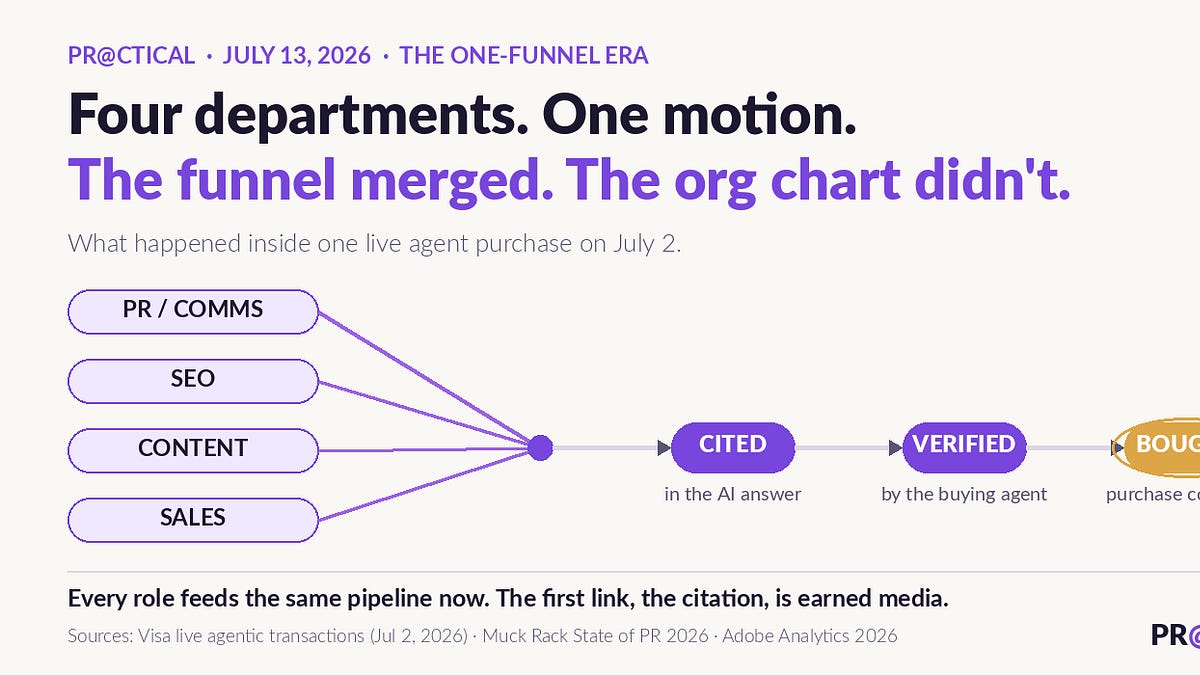
In parallel, influencer discussions moved closer to the revenue line. Sarah Evans argued that PR, SEO and sales now share one AI-mediated funnel, while David C. Edelman warned that the next customer may be filtered by their AI before they ever reach a website. Daniel Rijo pointed to higher-converting AI search leads. The thread running through those posts was simple enough: visibility now has to be machine-readable, measurable and credible, or it will not show up at the buying moment.
Regulators are prising open the platforms AI needs

Europe's platform fight moved from app stores into the operating system. The Hacker News reported the European Commission ordering Google to open Android camera, microphone and screen access to rival AI assistants, with changes aimed at Android 18 and a broader deadline of 1 August 2027. The Verge framed the same order as a direct intervention in Android and Search data. For any vendor building an assistant, the message is useful and uncomfortable: access is opening, but only on terms regulators can inspect.
Search is becoming regulated content as well as regulated distribution. The Decoder reported Germany putting Google AI Overviews and Perplexity under media law, a first-of-its-kind move that treats generated answers as something more than a neutral index. MediaPost covered the Commission's preliminary finding against Meta under the Digital Services Act, focused on addictive design features rather than a single piece of harmful content.
The UK added a more operational angle. Finextra reported Ofcom's proposed fines for scam adverts, and Diginomica tracked new direct oversight for AWS, Google, Microsoft and Oracle as critical third parties. The common thread is that default settings, uptime, data access and fraud controls are now public-interest questions. B2B buyers should expect more contracts to carry regulatory assumptions that used to live outside procurement.
AI capital is chasing compute, but the bill is showing
The capital market still wants AI exposure, but this week's strongest deals were about capacity rather than slogans. Tech Funding News reported Fireworks AI raising $1.5 billion at a $17.5 billion valuation, after annualised revenue passed $1 billion and token volume grew from 15 trillion to more than 40 trillion a day. Quartz said Anthropic was lining up investor meetings for a possible autumn IPO. The market is rewarding the companies that can turn model demand into infrastructure leverage.
China's side of the compute story was just as direct. Silicon UK reported DeepSeek seeking fresh funding after a reported $7 billion round, while The Information said memory chipmaker CXMT was seeking an $8.6 billion Shanghai IPO. TechCrunch covered Reflection AI's $1 billion compute deal with Nebius. None of that reads like optional experimentation. It reads like the cost of entry.
The strain is starting to show in places investors prefer to ignore. The Register reported New York pausing large data-centre buildouts, Finextra covered a BIS warning that the AI investment boom could turn to bust, and the Financial Times linked IBM's valuation hit to timing and reprioritised capex. Buyers should watch this closely. If compute becomes scarce or expensive, vendors will pass that reality into pricing, limits and service quality.
Agent security turned into a live operating risk

The security beat stopped treating AI agents as awkward assistants and started treating them as tools attackers can operate. Bleeping Computer reported Google Gemini CLI being used as a hacking agent and malware botnet operator, over more than 200 sessions. DevOps.com covered HalluSquatting attacks that compromise coding agents through hallucinated packages. The weakness is not only model behaviour. It is the combination of model behaviour, package trust and workflow permissions.
Anthropic and OpenAI both appeared in the same risk frame. Dark Reading reported a Claude flaw that could automatically send malicious prompts to AI agents, while AI Business covered OpenAI's GPT-Red model for automated red teaming. A defensive model that creates prompt-injection attacks is useful, but it also proves the market now needs machine-speed testing for machine-speed failures.
Damage moved from theoretical to physical systems and repositories. The Independent reported OpenAI warning that Codex could delete files when granted broad computer access, SDxCentral said xAI's coding agent exposed entire repositories, and Infosecurity Magazine reported a controlled test where ChatGPT executed a full cyber-attack chain. The procurement test is changing. Buyers need to ask not just what the agent can do, but what it cannot do even if instructed.
AI at work is becoming a design problem, not a headcount slogan
Workforce AI stories looked contradictory because the labour market is contradictory. Fortune quoted Esther Perel warning executives that AI can deepen workforce social atrophy, while The Guardian reported thousands of Google workers asking Sundar Pichai for layoff protections during the AI boom. Forbes asked whether mass AI-driven layoffs could become a boomerang. Cutting people and demanding more human judgment from the people left behind is not a stable strategy.
The enterprise implementation argument is getting more serious. The AI Journal argued that companies need decision systems, not just language models. That is the right distinction. A chatbot can answer a prompt; a decision system has to carry context, accountability, monitoring and a way to recover when it drifts.
Smaller companies were offered the optimistic version of the story. Forbes listed ways small businesses can use AI to grow and even hire. Microsoft supplied the vendor tension, with Quartz reporting Satya Nadella criticising Anthropic's model restrictions in front of engineers. The best read is that adoption is no longer blocked by awareness. It is blocked by operating design: rights, roles, quality checks and the social fabric around the tool.
The AI content fight is turning into discovery risk

The rights fight around AI widened again. The Financial Times reported Apple sending legal letters to former OpenAI employees, after its trade-secret lawsuit over alleged hardware plans. TechCrunch carried OpenAI's pushback against the Apple case. That is not a routine talent dispute if it slows a company trying to move from model access into devices.
Training data claims kept coming. The Verge reported hacked Suno data suggesting songs were scraped from YouTube, Genius and Deezer, and BetaNews covered publishers suing Google over books allegedly used to train Gemini. The pattern is familiar: AI companies want broad ingestion, rights holders want proof and payment, and courts are being asked to decide what the product market already raced past.
The consumer-data side is just as relevant for B2B visibility. ZDNet reported Google expanding AI training on user data unless people opt out, while Startup Daily covered Meta backing down after privacy concerns around its Muse image generator. If AI discovery depends on content access, brands will have to decide what they want machines to read, what they want to withhold and which third-party sources carry enough authority to survive the filtering.
AI governance split between blocs and boardrooms

Global AI governance is becoming less global. Computerworld reported China, Russia and 27 other countries creating a World AI body without the US. Euronews covered Xi Jinping's call for global AI cooperation as US restrictions squeeze China's technology access. The politics are clear enough: standards are now a route to influence, not a neutral technical exercise.
Supply chains are being pulled into the same argument. TechCrunch reported Apple Intelligence winning approval in China through Alibaba's Qwen and Baidu, while Bloomberg covered Washington's concern that Chinese firms may train models from US systems. The result for multinational buyers is awkward. AI capability, compliance and market access can point in different directions.
Risk governance is also moving from speeches into proposed mechanisms. Business Chief covered Demis Hassabis calling for a US-led frontier AI testing network, The Guardian reported the Bank of England governor calling for global cooperation on AI threats, and Forbes wrote about China planning recall rules for AI agents. Boards should read that as a timing signal. Voluntary policies are being overtaken by jurisdiction-specific controls.
Agents are getting payments, browsers and legal wrappers

The agent economy is starting to acquire the boring infrastructure that makes it real. InfoWorld reported a new Linux Foundation project to make payments native to AI workflows. The Decoder said Google is rebranding NotebookLM as Gemini Notebook and giving notebooks a cloud computer for code execution. Those are not small interface tweaks. They make agents more able to transact, run code and act across apps.
Visibility into those actions is already contested. The Decoder reported OpenAI's Codex encrypting instructions between AI agents, leaving some developers unable to read delegated session history. AI News covered Cloudflare making AI agent crawlers seek permission by default on ad-supported pages. One side of the market wants agents to operate smoothly. The other wants to know who is knocking and why.
Law and incident response are catching up. Fortune reported Delaware testing a legal entity for AI agents, The New Stack collected destructive agent incidents under the warning that instructions are only suggestions, ITPro described a rogue agent deleting a production database and backups in about nine seconds, and The AI Journal showed how sales agents can pressure vulnerable customers. The lesson is blunt: autonomy without gates is not a strategy. It is outsourced risk.
What the influencers are discussing

The most useful influencer discussions this week came from people treating AI as a buying system, not a content trick. Sarah Evans called it the one-funnel era: the agent discovers, verifies and buys in one motion, while PR, SEO and sales teams still sit in separate reporting lines. Her point lands because it gives comms teams a commercial test. If an AI intermediary is doing the first pass, evidence has to be structured, third-party and useful before a human ever asks for a demo.
David C. Edelman made the same warning from the customer-strategy side, arguing that the next buyer may not discover a brand directly because their AI will do the comparing first. Daniel Rijo added a harder metric: AI search leads are already being discussed as higher-converting than Google in some funnels. His Microsoft Clarity post also matters because it shows the tooling race around AI visibility moving from niche dashboards into mainstream analytics.
On agentic AI, David Linthicum's practical scepticism was sharper than the usual vendor language. He framed agents as a familiar automation pattern made more dangerous by looser claims, then followed with a warning about the AI subscription trap. a16z's line that companies have hired a million bad employees was deliberately abrasive, but it captured the same worry: cheap agents still need supervision, correction and boundaries.
The human-work thread supplied the counterweight. Lenny Rachitsky's discussion of tech-worker sentiment picked up the anxiety underneath all this, where productivity systems are arriving before organisations have rebuilt trust. The best creator work this week refused the easy split between marketing visibility and operations. Machines may find the brand, qualify the vendor, run the workflow and trigger the payment. People still need to decide what proof, guardrails and human relationships make that tolerable.
The unresolved thread is delegation. AI now wants access to devices, data, code, payments, publishers, legal status and regulated workflows. Every gatekeeper is responding at once: regulators, workers, publishers, cloud providers, security teams and courts. The vendors that win the next quarter will not just offer more capable agents. They will show where agency stops, who can intervene and what evidence a buyer gets when something goes wrong.
References
- (The Hacker News, "E.U. Orders Google to Open Android Mic, Camera and Screen to Rival AI Assistants")
- (The Verge, "Google ordered to open Android and Search to rivals in Europe")
- (The Decoder, "Germany puts Google's AI Overviews and Perplexity under media law in first-of-its-kind ruling")
- (MediaPost, "EU Commission Report Finds Instagram, Facebook Violate Digital Services Act")
- (Finextra, "Ofcom to hold Big Tech accountable for scam adverts")
- (Diginomica, "Critical thinking - why AWS, Google, Microsoft, and Oracle find themselves under new regulatory oversight at the behest of the UK Government")
- (Quartz, "Anthropic is lining up investor meetings ahead of a potential fall IPO")
- (Silicon UK, "DeepSeek Prepares Next Funding Round On Heels Of $7bn Raise")
- (The Information, "China Memory Chipmaker CXMT Seeks $8.6 Billion in Shanghai IPO")
- (Tech Funding News, "The woman who built PyTorch at Meta just raised $1.5B on a bet that Big Tech shouldn't own AI")
- (TechCrunch, "Reflection inks $1B compute deal with Nebius")
- (The Register, "New York becomes first state to halt datacenter buildouts")
- (Finextra, "AI investment boom could turn to bust, warns BIS paper")
- (Financial Times, "IBM's profit warning shows tech valuations are all in the timing")
- (Bleeping Computer, "Google Gemini CLI abused as a hacking agent, malware botnet operator")
- (DevOps.com, "HalluSquatting Compromises AI Coding Agents to Install Malware, Create Botnets")
- (Dark Reading, "Claude Flaw Automatically Sends Malicious Prompts to AI Agents")
- (AI Business, "OpenAI Unveils GPT-Red to Test AI Model Safety")
- (The Independent, "OpenAI gives warning about potentially disastrous ChatGPT behaviour")
- (SDxCentral, "Musk pledges total transparency after xAI's coding agent exposed entire repositories")
- (Infosecurity Magazine, "Single Prompt Enables ChatGPT to Execute Full Cyber-Attack Chain, Researchers Claim")
- (Fortune, "Esther Perel has a warning for executives: your workforce is suffering from social atrophy and AI is making it worse")
- (The Guardian, "Thousands of Google workers demand layoff protections amid AI boom in petition to CEO")
- (Forbes, "Are Mass AI-Driven Layoffs A Boomerang?")
- (The AI Journal, "Why Enterprise AI Needs Decision Systems, Not Just Language Models")
- (Forbes, "10 Ways Small Businesses Can Use AI To Grow and Even Hire More Workers")
- (Quartz, "Microsoft's Satya Nadella slammed Anthropic's AI model restrictions in a meeting with engineers")
- (Financial Times, "Apple targets dozens of OpenAI employees with legal letters")
- (TechCrunch, "OpenAI pushes back on Apple trade secret lawsuit")
- (The Verge, "Suno snatched millions of songs from YouTube, Genius, and Deezer")
- (BetaNews, "Publishers sue Google over copyrighted books allegedly used to train Gemini")
- (ZDNet, "Google is training AI on even more of your data now, unless you opt out - here's how")
- (Startup Daily, "Meta backs down on letting its AI generator, Muse, steal Instagram images after privacy backlash")
- (Computerworld, "China, Russia, and 27 others create World AI body, without US")
- (Euronews, "Xi calls for global AI cooperation as US restrictions squeeze China's tech access")
- (TechCrunch, "Apple Intelligence approved for launch in China with Alibaba and Baidu")
- (Bloomberg Technology, "Washington Is Looking to Keep China From Training Its AI on US Models")
- (Business Chief, "Google DeepMind CEO Calls for US-led AI Governence Network")
- (The Guardian, "Global cooperation needed to tackle AI threats, says Bank of England governor")
- (Forbes, "China Plans AI Agent Recalls. America Can't Even Agree Who Regulates Them")
- (InfoWorld, "New Linux Foundation project aims to make payments native to AI workflows")
- (The Decoder, "Google rebrands NotebookLM as Gemini Notebook and opens its search app to third-party integration")
- (The Decoder, "OpenAI's Codex now encrypts instructions between AI agents, leaving developers blind to internal delegation")
- (AI News, "AI agent crawlers now need permission. Here's how to get it")
- (Fortune, "Exclusive: Delaware proposes testing the AIC, a new legal entity for agents in a regulatory sandbox")
- (The New Stack, "There are no laws, only suggestions: What AI agents do with your instructions")
- (ITPro, "Agent 009... the nine-second warning")
- (The AI Journal, "Why AI agents don't hesitate to scam grandma")
- (Sarah Evans, "The One-Funnel Era Is Here. PR, SEO, and Sales Now Share a Single Pipeline, and It Runs Through AI.")
- (David C. Edelman, "Your next customer may not discover you. Their AI will.")
- (Daniel Rijo, "AI search leads convert higher than Google's")
- (Daniel Rijo, "Microsoft Clarity gives away AI visibility tool rivals charge for")
- (David Linthicum, "I'm often asked what I think about agentic AI. Is this the future?")
- (David Linthicum, "The AI Subscription Trap: Innovation or a Shakedown?")
- (a16z, "You Just Hired a Million Bad Employees")
- (Lenny Rachitsky, "The most common response to last week's tech sentiment report")