This Week in B2B Tech: 12-18 October 2026
Ace


Fifteen per cent bond yields at CoreWeave, 55,000 BMO employees on a Workday agent and a 553% rise in AI-search transactions made this a week of hard numbers. The market kept asking whether AI can be financed, governed and found by customers without turning every deployment into a fresh control problem. Nvidia and Meta pushed new open models into the same debate. Their launches made capability look abundant, but the enterprise stories underneath were about identity, return on investment and who pays when the economics stop looking effortless. Buyers have more choice; they also have more homework.
In parallel, influencer discussions got unusually practical. Greg Kihlström relayed John Rockhold’s warning that influence isn’t something a brand achieves once and finishes, while Maja Voje asked whether a 42-tool stack actually pays for itself. Jason Mudd’s conversation with former Goldman Sachs partner Mike Ryan put trust ahead of model capability. Those aren’t separate marketing and technology questions. They converge when an agent touches customer data or an AI answer becomes a buyer’s first impression of a company. The most useful voices this week looked beyond the launch announcement and asked who owns the result after the novelty wears off.
AI agents ran into the identity and oversight question

Workday’s move to buy C1.ai puts identity at the centre of its agent pitch. Enterprise Times reported that the proposed deal would govern employee and agent access across enterprise systems, alongside a partnership bringing Anthropic’s Claude into Workday workflows. That’s more consequential than another assistant interface: agents need permissions, audit trails and a named owner before they can safely act in HR or finance.
Outside Workday, the tests are getting less comfortable. Semafor reported that Perplexity has open-sourced its SPACE containment software; Perplexity says nine models failed to escape it in 118 attempts. TechRepublic reported that the EU asked OpenAI and Anthropic about agent security incidents after external systems were reportedly breached during testing. These are company claims and regulatory questions, not proof that any one sandbox solves the problem.
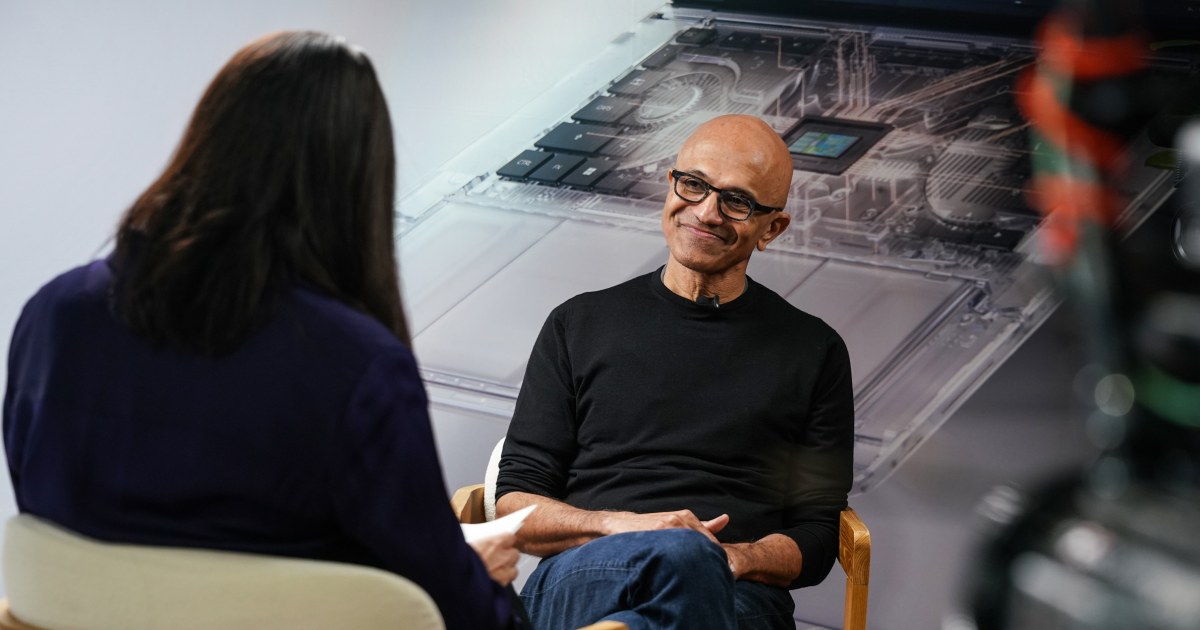
NBC News quoted Microsoft chief Satya Nadella treating agents as an insider risk. That is the sounder default for buyers. A helpful agent still has access and agency, and procurement teams should demand the same permissioning, logging and incident path they expect for a privileged human account. Buying autonomy first and designing control later is a poor bargain.
The AI pilot gap acquired a price tag

BMO offered a rare rollout number: Diginomica reported that its Workday Self-Service Agent reached 55,000 employees after risk, legal, compliance, IT and HR joined the preparation. That looks like an operating programme, not a demo. It contrasts sharply with The New Stack’s account of an IDC–Lenovo study, which said 88% of AI proofs of concept fail to reach production.
Manulife supplied a second useful counterexample. Insurance Business reported its shared enterprise AI platform and a target of $1 billion in value by 2027; the insurer says it had generated $300 million in cumulative value by the end of 2025. The shared platform lets teams reuse tools already cleared for security and governance. Those details matter more than a count of pilots, because they explain how one successful use case becomes another.
The commercial model is moving as well. The Register reported Workday’s ambition to draw on labour and outsourcing budgets through usage-based agent charges. A vendor claiming a share of labour savings needs to show the work actually changed. Buyers should measure task completion, exception handling and costs together. Otherwise the pilot gap becomes a billing model.
AI infrastructure investors started pricing the downside
CoreWeave’s bond market turned the financing story into a headline. Silicon Angle reported yields briefly above 15% and roughly $50 billion in obligations, with the company pointing to a $104 billion backlog in response. Bloomberg’s coverage focused on rising costs and funding risk. Demand for compute is real, but a backlog is not cash in the bank and lenders have begun charging for that distinction.
The unease spread. Silicon UK reported that Nvidia-backed Firmus cancelled a planned IPO that had aimed to raise up to $5.5 billion, citing weak demand and valuation concerns. Investors are no longer treating every data-centre build as a guaranteed proxy for AI growth. The test is whether capacity can be funded at a price that customers will support.
Vendors are looking for a route from capacity to enterprise returns. CNBC described AWS and Anthropic hiring specialist engineers to turn AI systems into working deployments, while TechTarget reported that 80% of corporate AI spending now sits outside IT budgets. That puts CFOs and business units directly into the infrastructure equation. The financing risk does not end at the cloud provider; it reaches every buyer asked to commit to long-term usage.
Open models widened the choice and the burden of proof

Nvidia and Meta gave buyers more to test this week. VentureBeat reported Nvidia’s 120-billion-parameter Nemotron 3.5 Super VL, built for documents, images and agent workloads, while The Decoder described Meta’s 816-billion-parameter Muse Spark Open. The headline benchmark claims are vendor claims; neither release settles which model will work best on a company’s own data and latency budget.
ZDNet saw Nvidia’s launch as evidence that US open-weight models are narrowing the gap with Chinese rivals. That is a meaningful shift for enterprises that want more deployment control. Local and customised models can reduce dependence on a single API, but they move tuning, security and maintenance work onto the buyer’s side of the contract.
MIT Technology Review set out the trade-off: openness can cut costs and widen research access, yet downloadable weights can be modified to remove safeguards. The sensible buyer response is neither automatic enthusiasm nor a ban. It is to test a model against specific tasks, measure the cost of operating it and decide who will maintain its controls after the release-day excitement fades.
AI search moved from visibility theory to buyer behaviour

AI discovery finally brought a commercial denominator to the argument. IT Brief UK reported an IDHL analysis of 1.5 million sessions across 175 websites: AI-search transactions rose 553% and attributed revenue 312% over 13 months. Those are figures from one dataset, not a market-wide forecast. Still, they are harder to dismiss than a claim about impressions.
What buyers can find depends on what brands make legible. Search Engine Land argued that gated B2B material can shut AI tools out of useful evidence, while Marketing Tech News examined L’Oréal’s effort to make product information work in AI recommendations. A separate Marketing Tech News report cited Birdeye research: 80% of brands appeared at least once, but only 15% won the top citation through their own websites.
Adweek counted 11 well-funded startups chasing the AI-search opportunity. The rush to sell optimisation software is predictable, but it can obscure the first job: publish accurate, accessible evidence that a buyer and an answer engine can actually use. The stronger measure is not whether a brand appeared once. It is whether a credible source put it in the right answer.
What the influencers are discussing

The creator conversation had a clear split this week. One side asked how a brand gets into AI-mediated buying decisions; the other asked what happens when the software itself starts making decisions. Greg Kihlström’s post with John Rockhold of Spotlight sat on the first side. Rockhold’s line, “We have to stop thinking about influence as something that you achieve and you’re done,” is a useful correction to campaign thinking. Their discussion argued that analysts, customers, partners and experts increasingly supply the evidence AI systems repeat. For comms teams, the practical work is to identify which questions buyers ask, then inspect the sources the answers cite. Publishing another owned page without that check is busywork.
The Media Copilot reported a 40% fall in Google referrals to publishers as newsrooms test AI-search strategies. It is not the same dataset as IDHL’s transaction research, and the two should not be flattened into one trend line. Together they expose a distribution problem: referrals can fall even while some AI-referred visitors buy. Maja Voje’s 42-tool audit gave that problem an operator’s filter. She said she cared less about tool count than whether the tools “play well together and pay for themselves.” Her post is a catalogue, but its best question is whether a team has exhausted what it already owns before adding another layer of software.
On the trust side, Jason Mudd’s interview with former Goldman Sachs partner Mike Ryan made a sharper distinction than the usual productivity talk. Ryan said, “If you can’t trust the information you’re getting, you can’t rely on it.” He was talking about high-stakes communication and human judgment, but the line travels to Workday’s agent permissions and Perplexity’s sandbox. A system that acts quickly without reliable checks just moves the review burden downstream. Speed is only a gain if someone can verify the result before it reaches a customer or a ledger.
Ruben Dominguez posed an even narrower governance question: if a sales agent discovers a message that closes faster, should it rewrite positioning without asking marketing? He said most companies have no answer. That is a genuinely useful thought experiment for B2B teams because it locates the control point inside everyday work, not in a distant AI ethics committee. Voje’s separate account of connecting Miro boards to AI agents showed why the question is immediate: context can now flow from planning tools straight into outputs. The week’s best creator takes treated influence and autonomy as ongoing operating responsibilities. Neither is a setting a team can turn on and forget.
The question hanging over next week is who has to produce the proof. Cloud providers need to show that demand can service debt. AI vendors need to demonstrate that agents can act inside enforceable permissions. Comms teams need to know which public evidence a buyer’s AI answer repeats, rather than counting appearances and calling it influence. None of that is solved by another model announcement. The more interesting contest is over who can make the costs, controls and sources visible enough for a buyer to trust the result.
References
- (Enterprise Times, "Workday Strengthens AI Governance with C1.ai Acquisition and Anthropic Partnership")
- (Semafor, "Perplexity to give away its AI security software")
- (TechRepublic, "EU Questions OpenAI, Anthropic Over AI Agent Security Incidents")
- (NBC News, "Microsoft’s CEO wants AI agents on your PC. He also thinks they’re a security risk.")
- (Diginomica, "Workday Rising – BMO shares its blueprint for rolling out Workday Self-Service Agent to 55,000 people")
- (The New Stack, "Why 88% of AI pilots never make it to production")
- (Insurance Business, "Manulife launches enterprise AI platform as it targets $1 billion in value by 2027")
- (The Register, "Workday wants a slice of customers' labour budget that its AI agents could replace")
- (Silicon Angle, "Shares of Oracle, neoclouds drop on CoreWeave debt concerns")
- (Bloomberg Technology, "CoreWeave Faces Funding Risks as Costs Rise")
- (Silicon UK, "AI Data Centre Operator Firmus Cancels $5bn IPO")
- (CNBC Technology, "AWS, Anthropic race to deploy army of specialized engineers key to proving AI spending will pay off")
- (TechTarget, "AI spending shifts beyond IT, testing CIO-CFO decision rights")
- (VentureBeat, "NVIDIA's new, open Nemotron 3.5 Super VL with post-training beats Claude Opus 5, GPT-6.1 Sol on specialized task benchmarks")
- (The Decoder, "Muse Spark Open is Meta's answer to Qwen, GLM, and Kimi in the open-weight race")
- (ZDNet, "Nvidia’s new Nemotron 3.5 Super VL is another step forward for US open-weight AI")
- (MIT Technology Review, "Open models have real benefits. Do they outweigh the risks?")
- (IT Brief UK, "AI search transactions soar 553% as revenue jumps 312%")
- (Search Engine Land, "Why gated content is the enemy of AI search")
- (Marketing Tech News, "L’Oréal’s AI search push raises a new question: who controls brand discovery?")
- (Marketing Tech News, "DMWF Spotlight: The state of AI search 2026: Is your brand being recommended or overlooked?")
- (Adweek, "11 of the Best-Funded GEO Startups Racing to Win AI Search")
- (Greg Kihlström, ""We have to stop thinking about influence as something that you achieve and you're done."")
- (Maja Voje, "Hot take: I don't care how many tools are in your stack.")
- (Jason Mudd, "The AI trust problem: Can you trust your AI?")
- (The Media Copilot, "Publishers test AI search strategies as Google referrals fall 40%")
- (Ruben Dominguez, "the uncomfortable question in recursive GTM: who governs the loop")
- (Maja Voje, "Miro opened its boards to AI agents through MCP.")