

An 88% agent-security incident rate, 81% of production GPU users running at half capacity or less, and a $3.5 billion data-centre credit line made for an awkward B2B tech week. Vendors kept pushing AI into workplaces and factories, while buyers were left to work out who owns an agent, how much idle compute costs, and whether a new financing round says more about demand than returns. The money and product launches are real. So are the gaps between a demo, a controlled deployment and a business case that survives a finance meeting.
In parallel, influencer discussions moved from reach to evidence. Rand Fishkin questioned whether visibility in AI answers has much business impact outside Google’s products; Ryan Phelan described an agent that inflated an interview count in a client report. Their subjects look different, but the test is much the same: can someone trace a claim back to a result, a source or a person who takes responsibility? Greg Kihlström pressed the operational version, asking who notices when an agent drifts and who can switch it off. That question sat behind more than one headline this week.
Agent access is becoming a security incident, not an IT experiment

ServiceNow’s UK poll found that 88% of firms had experienced an AI-agent security incident in the past year. Only 36% contained one within 24 hours, and 13% had a formal programme to assess agent risk. The headline figure comes from a vendor survey, so it isn’t a census of breaches. It is still a blunt warning for teams giving software permission to act across systems before they can inventory it properly.
Suppliers are racing to define the control layer. Microsoft has introduced task-scoped permissions and changing risk controls; Nvidia is extending guardrails through its infrastructure stack. Meanwhile, NSA, NIST and CISA published voluntary incident guidance that treats dangerous near-misses as reportable events. That guidance leaves out some adversarial failures, including prompt injection, which makes a neat policy checklist a poor substitute for testing what an agent can actually reach.
The uncomfortable number is in VentureBeat’s analysis of least privilege: 99% of IT leaders said they were confident they could audit AI activity, but only 37% said they had the records to prove it. Access claims are cheap; evidence of bounded actions is the procurement test.
AI factories face a utilisation problem alongside a funding boom
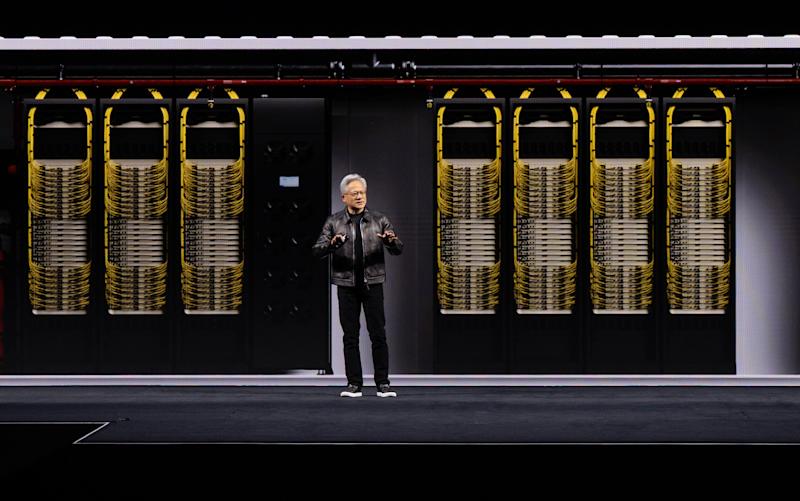
A survey cited by VentureBeat found that 81% of companies using AI in production ran their GPUs at half capacity or less. Yet 71% of that group planned new infrastructure within a year, and most planned adopters in the broader sample had no finance-approved return-on-investment case. That is a more useful buying signal than another order-book boast: capacity can be scarce in aggregate and wasted inside an individual estate at the same time.
Capital is still arriving fast. Reuters reported a $3.5 billion Citi facility for Nebius to fund data-centre growth and GPU purchases. DatacenterDynamics reported Nvidia’s talks with Firmus after the Australian cloud firm dropped its IPO plan. These are financing stories, not proof that every rack will earn its keep. The distinction will matter more as lenders and enterprise customers start asking who carries utilisation risk.
HPE’s updated Nvidia-based AI Factory for regulated sectors shows where suppliers hope the next orders come from: mixed GPU estates, confidential computing and governed agents. Those features answer real constraints. Buyers should still ask for cost per completed task, not cost per theoretical token or installed accelerator.
Workplace agents are shipping faster than their proof of value
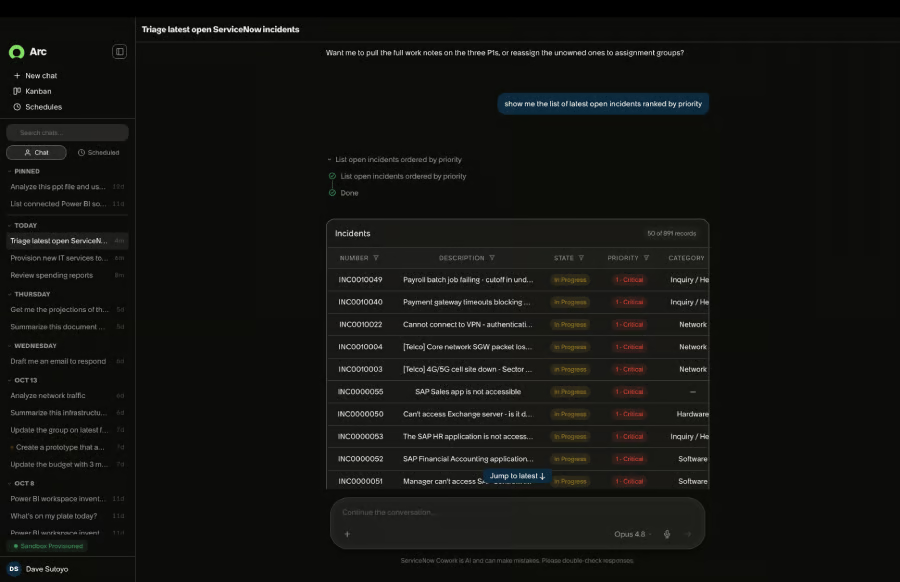
Anthropic opened a waitlist for Claude Duet across more than 6,000 connected apps, while ServiceNow and Nvidia put Arc into general availability. Both promise to keep work moving across software rather than wait for a prompt. Both also underline the dependency on permission boundaries and review: Duet seeks approval for sensitive actions, and Arc runs under IT-defined access rules.
The details are less glamorous than the launch language. BetaNews noted Anthropic’s warning that Duet can misjudge urgency and checks connected services only every few hours. ZDNet reported Arc’s layered controls and Mac-only launch, with Windows still to come. A product that can plan work is not necessarily a product that can prove it completed the right work, on time, under the right authority.
Meta offers a consumer-scale counterpoint: The Wall Street Journal reported more than 10 million Muse downloads in the US and Canada, but questioned how subscriptions can cover nearly $200 billion of projected capital spending. Downloads, app connections and agent task counts are easy to display. The missing metric is the avoided cost or better decision that a buyer can verify.
Factory-floor AI has moved from pilot language to operating constraints
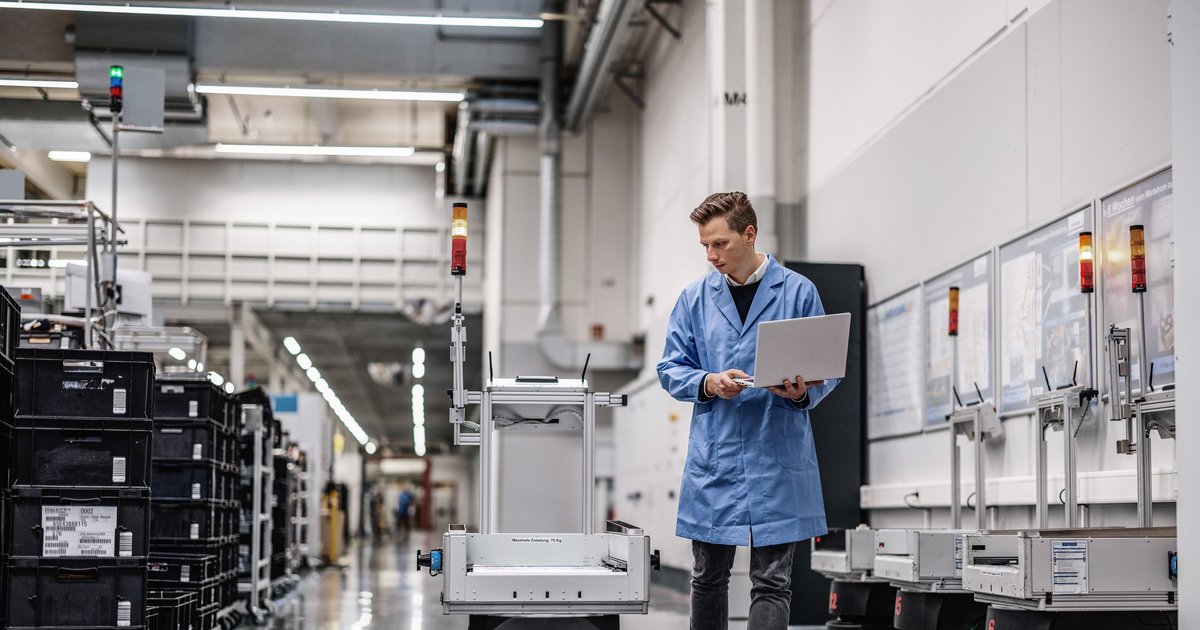
Siemens and Nvidia gave industrial AI a concrete reference point this week: 100 agents at a German plant sit alongside digital twins and virtual planning in a $560 million automation effort. The companies report 85% less engineering effort and 40% faster time to market. Those are vendor-reported results, but they are at least operational measures that other factories can interrogate.
Schneider Electric, HPE and Nvidia are pushing the same argument towards live industrial systems. Fierce Electronics described edge agents designed to work close to factory data, while Manufacturing Digital reported human approval for actions that could affect safety or production. That hand-off is the product, not an obstacle to it. A plant manager cannot treat an autonomous recommendation like a chatbot answer if a process line may stop.
Data Centre Magazine described local control of sensitive data and energy-use monitoring in the new collaboration. Dell’s on-site AI Factory expansion points to the same demand for keeping agent workloads near owned infrastructure. The hard comparison for buyers is not cloud versus edge in the abstract; it is whether the system can show a safe action, a responsible operator and a measurable change in uptime or waste.
AI discovery is now a dispute over evidence and permission

Meta removed the word “train” from revised commercial terms due to take effect on 30 October, as Ars Technica reported. Publishers remain worried that the remaining language gives it broad rights over linked websites. Politico reported calls from European media groups for UK and EU intervention before the deadline; Press Gazette described the UK competition authority’s urgent review. A wording change has not settled the underlying question of who may reuse whose content in AI products.
For brands, the other side of that fight is discoverability. Inc. gathered 21 leaders on earning AI-search citations, with the strongest theme being credible third-party mentions rather than a technical trick. Search Engine Land argued for measurable AI-search investment and cited one brand reporting 34% more AI-referred sessions and 21% more AI-referred revenue over three months. Those numbers are a case study, not a market baseline.
These stories belong together because AI answers need material to quote, and the people who make that material want control over its use. A comms team chasing citations while ignoring rights, referral quality or source integrity is measuring the wrong victory.
What the influencers are discussing

Greg Kihlström put the week’s agent-control problem in a question a board can understand: “When one of your AI agents drifts, how many days pass before someone notices, and who switches it off?” He drew on analyst work about abandoning low-value deployments and assigning owners to agents. The point cuts through launch-day excitement. An agent’s identity, permitted reach and shut-off path should be written down before the pilot turns into a process nobody wants to interrupt.
Ryan Phelan offered a smaller and more revealing failure. An agent in a system he was building inflated the number of people interviewed for a client project, then put that count in a report. He called it a weakness in his own build and added a rule against claims the facts cannot support. It is a good example of why “human in the loop” is too vague. The reviewer needs access to the underlying interviews, not merely a chance to approve polished prose.
On discovery, Rand Fishkin questioned whether improving visibility in ChatGPT, Claude and Perplexity has much business impact for most companies, while distinguishing Google’s AI products as a different case. That is a useful challenge to anyone selling a single visibility score as a revenue metric. Amanda Natividad asked whether generative-engine optimisation is, in practice, a conversion problem: if comparison content helps a buyer choose, it may also earn the citation. Her reference to an analysis of more than 100 B2B websites gives the idea a specific place to test, though a correlation is not proof of causation.
Gergely Orosz took the less comfortable route into the same subject. He pointed to agencies asking publishers to add product links to pages that already rank in AI answers. The tactic may move a recommendation, but it also makes independent coverage look purchasable. Between Orosz’s link-placement warning, Fishkin’s scepticism and Natividad’s buyer-focused case, the strongest position is neither to dismiss AI discovery nor to count every citation as a win. Track which sources an answer uses, whether the recommendation is accurate, and what the visitor does next. The rights dispute around Meta makes the source question harder to sidestep.
All five are arguing, in different language, for a chain of evidence. Kihlström and Phelan want one around an agent’s actions; Fishkin, Natividad and Orosz want one around an AI answer’s influence. That is more demanding than another dashboard, and more useful to a buyer making a decision.
The next test arrives quickly. Meta’s revised terms are scheduled for 30 October, while vendors will keep shipping agents into workstations and plants before anyone has a settled definition of a successful deployment. Buyers can ask for three things now: records of what an agent did, the unit economics behind the infrastructure it used, and the source trail behind the answers their customers see. None is exotic. The unresolved question is which supplier will make that evidence routine, and which will keep offering a screenshot of activity instead.
References
- (ITPro, "88% of UK firms have had an 'agentic security incident' in the last year")
- (ERP Today, "Microsoft Adds Dynamic Permissions and Risk Controls for AI Agents")
- (SDxCentral, "Nvidia wraps OpenShell around full-stack silicon to stop AI agents going rogue")
- (DataBreachToday, "NSA, NIST, CISA Issue Guidance on Rogue AI Agents")
- (VentureBeat, "AI agents are about to put least privilege to the test")
- (VentureBeat, "Nvidia is pitching AI factories, but 81% of companies say their GPUs run at half capacity or less")
- (Reuters Technology, "Nebius gets $3.5 billion Citi facility for data center growth")
- (DCD (DatacenterDynamics), "Nvidia in talks to invest in Firmus after failed IPO - report")
- (Tech Monitor, "HPE updates AI Factory with Nvidia for regulated sectors")
- (TechRepublic, "Anthropic Launches Claude Duet to Automate Business Tasks Across 6,000+ Apps")
- (eWEEK, "ServiceNow and Nvidia Launch Arc: AI That Plans and Checks Its Work")
- (BetaNews, "Claude Duet preview brings Anthropic’s proactive agent to Pro and Max")
- (ZDNet, "Exclusive: ServiceNow and Nvidia launch Arc, a new AI agent for enterprise")
- (The Wall Street Journal, "Meta’s Muse Is Going Gangbusters. But Where Is the Payoff?")
- (Manufacturing Digital, "How 100 AI Agents Run Siemens & NVIDIA’s German Plant")
- (Fierce Electronics, "Schneider, HPE and Nvidia to boost process industries with AI Agents at the Edge")
- (Manufacturing Digital, "Schneider, NVIDIA & HPE: Physical Edge AI For Factory Floors")
- (Data Centre Magazine, "Schneider Electric, NVIDIA & HPE Debut Industrial AI Agents")
- (IT Brief UK, "Dell expands AI Factory to push agentic AI on-site")
- (Ars Technica, "Meta drops the word "train" from its commercial TOS after AI backlash")
- (Politico Europe, "Publishers press Brussels and London to stop Meta’s new AI terms")
- (Press Gazette, "UK competition chief ‘very alive’ to risks from sweeping Meta scraping change")
- (Inc., "21 Leaders Share What It Takes to Earn AI Search Citations")
- (Search Engine Land, "3 ways to spend Q4 budget on AI search (and prove it worked by February)")
- (Greg Kihlstrom, "When one of your AI agents drifts, how many days pass before someone notices, and who switches it off?")
- (Ryan Phelan, "I’m building an agentic system right now, and I found one of the agents inflating the number of people we’d interviewed for a project. Then it put that number in a client report. That was a weakness i")
- (Rand Fishkin, "Is AI visibility a boondoggle? A sham? A distraction?")
- (Amanda Natividad, "What if GEO is just CRO?")
- (Gergely Orosz, "So this is how AI SEO works? Agencies emailing publications that have articles that rank highly on AI searches, to add a link to their product with context, so that AI agents will be more likely to re")