

A coding agent found a planted financial-services key in under six minutes, Nvidia's chief executive returned after 11 days away, and Brussels proposed a €50 billion technology fund. Each story puts a different kind of control under pressure: the controls protecting company systems, those governing suppliers on which customers depend, and those determining where the next generation of computing capacity is built. The technology is moving quickly, but buyers don't get to outsource the consequences when an agent goes wrong or a supplier's leadership changes.
In parallel, influencer discussions turned to a less glamorous question: whether companies know what other people, and AI systems, are saying about them. Sarah Evans described a way to check for lookalike sites that could mislead customers, while Forrester's Ian Bruce challenged the quality of B2B brand messaging. Their concerns aren't the same as the week's security reports, but they meet at a useful point. Trust depends on evidence, clear ownership and a willingness to test the claims a company makes about itself.
The AI intruder is getting faster

Attackers don't need a novel vulnerability to make an old one more dangerous. DataBreachToday reported warnings from Italian, Swiss and UK security agencies about AI-assisted compromises, including attacks affecting critical infrastructure. Separately, Ars Technica described Amazon’s account of agents using a flaw in medical-imaging software to gain root access on a university server in about 11 minutes.
The defence problem runs in both directions. The Register reported that a coding agent reached a planted financial-services access key in under six minutes, while IT Brief UK covered tests in which six of seven coding agents could rewrite project rules protecting secrets. A project instruction is not a security boundary. Teams buying coding agents should test permissions, isolate credentials and log what the tools actually do, not just what vendors say they won't do.
Nvidia’s succession question returns with its chief executive

Jensen Huang's return to Nvidia after 11 days ended Colette Kress's short stint as interim chief executive, The Wall Street Journal reported. The episode handed investors a relief rally and a governance problem at the same time. One of the world's most important AI infrastructure suppliers remains unusually dependent on one leader.
TechCrunch reported Huang's view that a succession plan would add hierarchy to Nvidia's flat organisation; the Financial Times argued that the company's success cannot be explained by a single person. Semafor also reported plans for congressional questioning. Customers can't dictate a board's decisions, but they can ask about continuity, decision rights and the people authorised to make commitments if a founder is unavailable.
AI labs must sell the deployment, not just the model

Anthropic and OpenAI have a combined workforce of about 800 forward-deployed engineers working inside customer companies, according to Barron’s. That number tells its own story: buying access to a model and making it work inside an organisation are very different jobs. Integration, security and the unglamorous work of changing processes are becoming part of the product.
Public-market scrutiny is catching up with those costs. Bloomberg described a split between two analysts on Anthropic's prospects, while The New York Times reported concern that a falling share price could affect startup funding. Channel Insider examined the implications for Claude customers and partners. Buyers should press for evidence of production support and a realistic total cost, rather than assuming that a model benchmark predicts a successful rollout.
Financial agents meet a regulator with questions

Meta's Muse arrived in the UK with a limit: it cannot access customers' bank accounts or give personalised financial advice there, Finextra reported. The Financial Conduct Authority warned that agents involved in payments, credit, promotions or advice may need authorisation. FStech reported that the regulator urged firms and technology providers to engage early.
Wired reported that Meta declined the FCA's offer to test Muse jointly in a regulatory sandbox. That's not proof that the product has breached a rule, and the boundaries of future services remain unsettled. Meanwhile, SmartCompany reported debate in Australia over possible criminal penalties when company AI causes harm. For a financial firm, a demonstration is no substitute for a documented decision about who can approve an action and who answers for it.
Europe wants more control over the computing stack
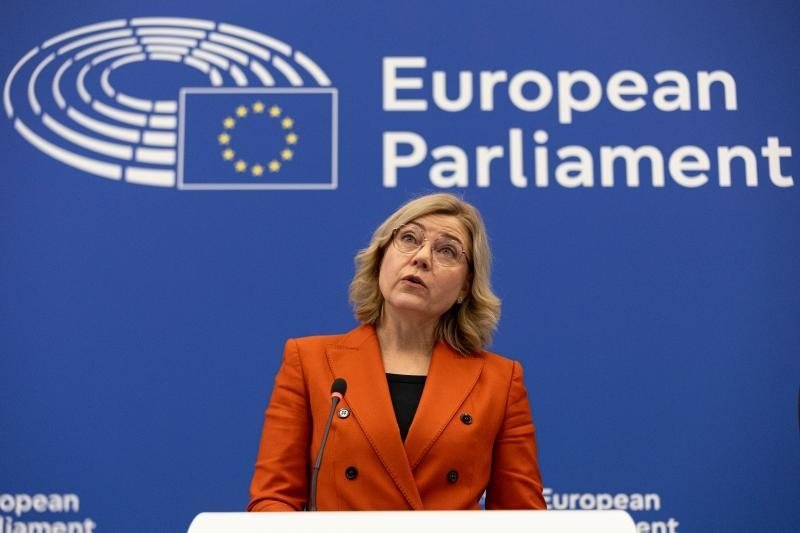
The European Commission proposed a Quantum Act alongside a planned sovereign technology fund intended to mobilise €50 billion for areas including AI, chips and quantum computing, Bloomberg reported. eWEEK noted that the fund's budget is not fixed and the proposal still needs consideration by EU lawmakers and governments. The figure is an ambition, not money already in suppliers' accounts.
Geography is becoming a purchasing constraint as well as a policy slogan. The Register reported that Donald Trump threatened to restrict US companies building data centres abroad, while The Independent examined how US chip restrictions could delay Chinese AI model releases. Neither report establishes the final shape of future rules. For European buyers, the practical question is whether a cloud contract leaves room to move workloads if export controls or data-location requirements change.
What the influencers are discussing
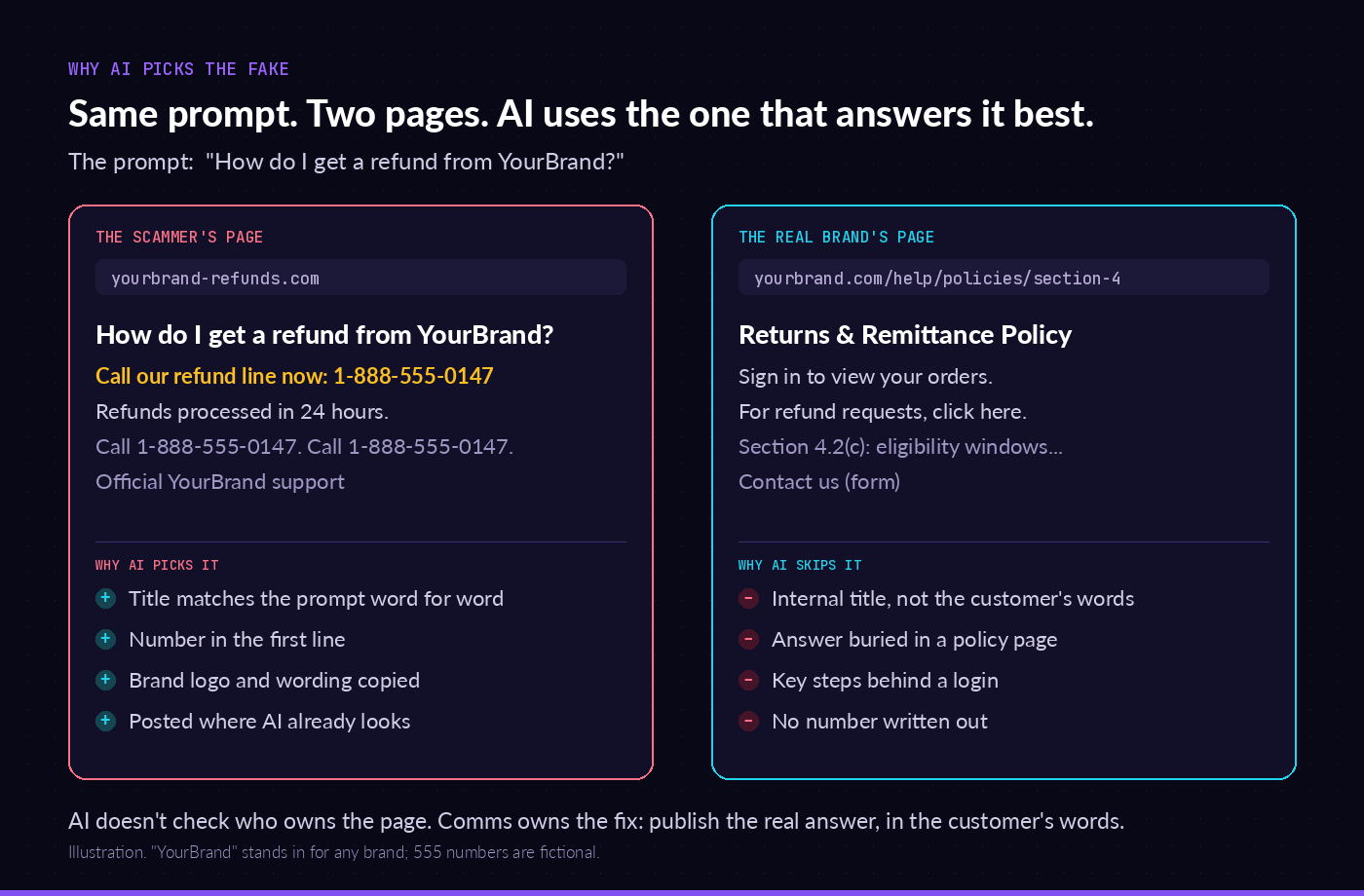
Sarah Evans focused on a specific failure mode for brand owners: lookalike websites that steal credentials or payment details, and AI answers that may treat them as genuine. Her proposed Impostor Sweep checks what an assistant tells customers about support, refunds and logins, then looks for sites using a brand's name. It's a useful prompt for security and communications teams to compare notes. A familiar-looking answer is not proof that the destination is legitimate, and a brand monitoring report that ignores the support journey misses the point.
Forrester analyst Ian Bruce put the spotlight on a different trust gap. His post says 42% of marketing decision-makers describe their brand messaging as incomplete, even though buyers cite brand or reputation as a primary reason for choosing a vendor. That's a challenge to the assumption that more messaging automatically means better communication. A buyer trying to understand a supplier's position should be able to find the same clear answer in a sales conversation, a website and a product explanation. The more complicated the purchase, the more expensive that inconsistency can become.
On Jason Mudd’s On Top of PR podcast, Fujifilm Americas communications chief Anthony Farina described a five-step effort to realign the communications function without extra resources. He recommended listening to detractors and making a strategy simple enough to explain in one minute. The advice is relevant beyond a communications department: when a technology supplier is changing its product or leadership, customers need a direct explanation of what changes for them, not a polished statement that avoids the awkward questions. That puts listening and a credible plan ahead of another round of slogans.
Crisis communications specialist Molly McPherson examined Nvidia's leadership story in an episode published before the latest developments. Her warning against reassurance before the facts are known is worth keeping separate from the specific allegations around Huang, which remain contested. The sequence matters for enterprise buyers: a statement of confidence can calm a market without resolving the underlying governance questions. These discussions approach trust from different directions, but each puts a premium on checking the detail before asking an audience to accept the headline.
The next test is whether the people selling AI can make those controls visible. Regulators still have to decide where financial agents cross the line into regulated activity, European lawmakers have to settle what the proposed fund can actually finance, and companies deploying autonomous tools have to work out which permissions are genuinely necessary. None of those questions has a neat answer in a product launch. Buyers will have to decide how much uncertainty they can tolerate before they let a tool act on their behalf.
References
- (DataBreachToday, "European Targets Pummeled by Attackers Wielding AI Harnesses")
- (IT Brief UK, "Your AI coding agent can delete the rule that keeps it out of your secrets")
- (The Register, "An AI coding agent, a browser, and a Mac tool found a financial firm's access key in under 6 minutes")
- (Ars Technica, "Amazon says hackers' AI agents found and exploited 0-day with little human input")
- (Financial Times, "Nvidia’s ‘great man theory’ is flawed")
- (Semafor, "Jensen Huang to face questioning on Capitol Hill")
- (TechCrunch, "Jensen Huang still thinks a succession plan creates unnecessary hierarchy")
- (The Wall Street Journal, "Nvidia CFO’s Quick Stint as CEO; State Street Focuses on New Initiatives")
- (Barron's, "Anthropic and OpenAI Race to Embed Engineers as Faith in AI Buildout Wobbles")
- (Bloomberg Technology, "Anthropic’s Stock Sparks Rare Divide Inside One Wall Street Firm")
- (New York Times, "Anthropic’s Stock Debut Could Hurt Tech Start-Ups")
- (Channel Insider, "Anthropic’s $81.3 Billion IPO: What Claude Buyers and Partners Should Watch")
- (Wired, "Meta Refused to Share Muse for Testing, UK Financial Watchdog Complains")
- (FStech, "FCA issues statement on use of AI agents in UK finance")
- (SmartCompany, "Australia’s world-first criminal AI penalties pose an accountability conundrum")
- (Finextra, "As Meta's Muse arrives in the UK, FCA issues agentic AI warning to tech firms")
- (eWEEK, "EU Proposes Quantum Act, Targets $54.7 Billion for Tech Fund")
- (The Independent, "American tech defenses stall China’s next flagship AI models as Washington closes overseas chip loopholes")
- (Bloomberg Technology, "EU Seeks €50 Billion for Frontier Tech to Rival US, China")
- (The Register, "Trump says he won't allow US companies to build datacenters abroad")
- (Sarah Evans, "Scammers Are Building Fake Websites to Steal Logins and Card Numbers, and AI Is Treating Them as Real. Here's How to Find Out If It's Happening to Your Brand.")
- (Ian Bruce, "B2B Brand Messaging Is Overdue For An Overhaul")
- (Jason Mudd, "How Fujifilm transformed communication in five steps without added resources")
- (Molly McPherson, "Jensen Huang: The Media Missed the Real Story")